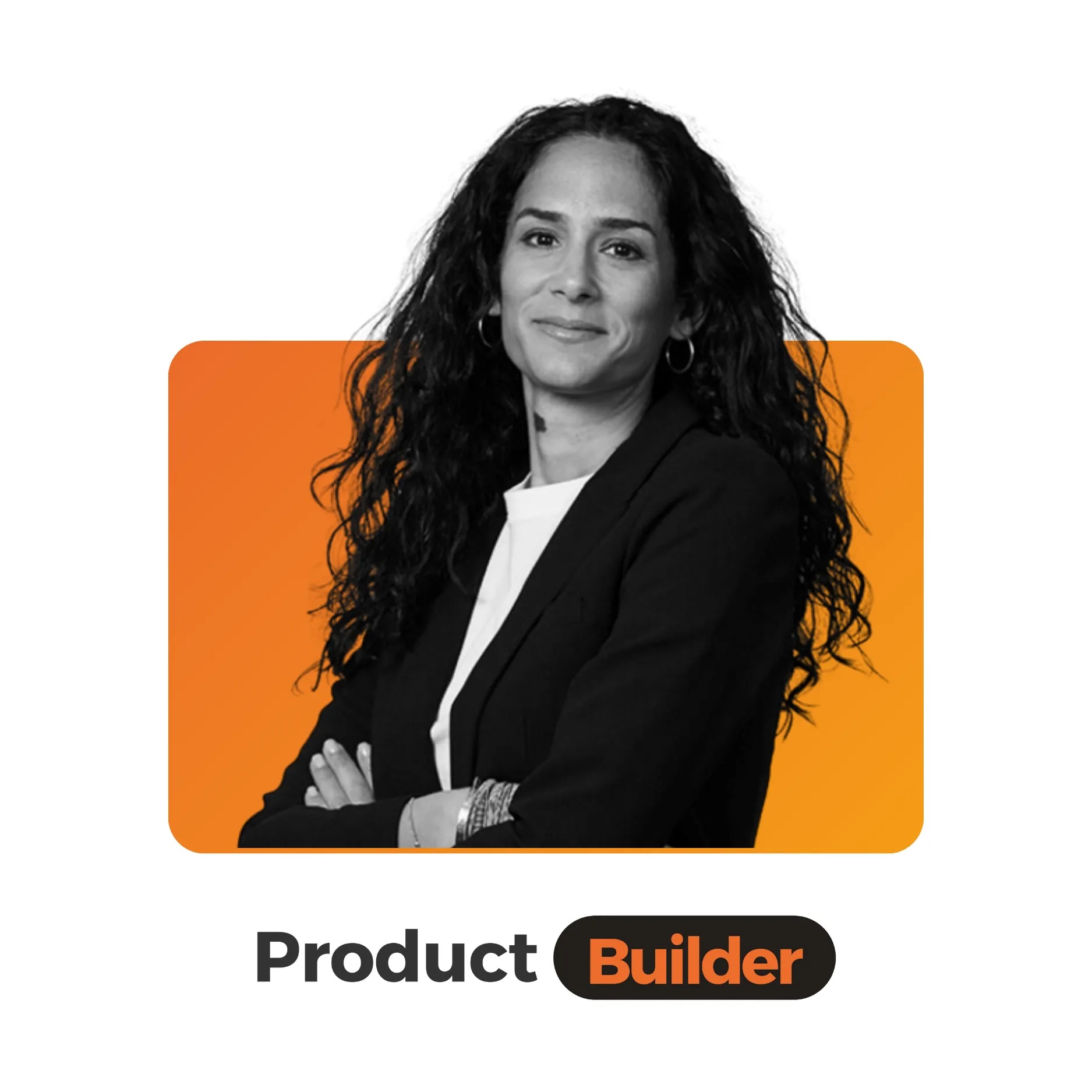
Product Strategy at a Hyper-Growth Cyber Company — Dana Gilboa, CPO of Armis
Host: Eyal David · Guest: Dana Gilboa · About the host
In this episode
- Armis's growth strategy rests on two axes in parallel: deepening in existing markets and verticals (OT/IoT, Healthcare, federal) and expanding the product lines — all connected to the Centrix platform and fed by the Asset Intelligence engine that has seen billions of devices.
- When choosing product people, skills are secondary because they can be learned — what Dana looks for first are traits: sharpness of thought, the ability to prioritize and cut a decision, the ability to distill a message, and excellent communication with development, Sales, R&D, and marketing.
- The central tension in product management at this stage is the balance between giving the large install base its feature requests and the need to innovate and solve tomorrow's problems — where the main fuel for innovation is close dialogue with customers through forums like the Customer Advisory Board.
- The build-vs-buy decision derives from focus: what's at the core of the product is built in-house, and when there's a business opportunity whose pace is hard to keep up with (Silk Security) or a domain that requires unique expertise (CTCI) — you go to M&A.
- Effective innovation is bottom-up: when you give developers and data science people deep knowledge about the problem space and about what the user is trying to do, they arrive at better solutions than the ones the PM thought of — solutions aimed at the business need and not at engineering elegance.
- Dana's superpower, from her development days, is taking a complex, messy problem and breaking it down into 'boxes' and a flowchart — and encouraging product people (and especially women, who usually feel less comfortable) to 'be the person with the marker,' to ask the questions and lead to the solution.
Listen to this episode
Episode Description
Dana Gilboa, the CPO of Armis, tells how product strategy looks at a cyber company in insane growth. From the first product that mapped IoT devices in 2016, through expansion into the Healthcare and OT verticals, to five product lines and the Centrix suite — she breaks down the tension between serving hundreds of existing customers and innovating, and when it's right to build a product in-house versus going the M&A route. Alongside this, a candid conversation about her path from development to product, about the superpower of breaking down problems, and about why it's important to 'be the person with the marker.'

Full transcript with speakers and timestamps
Selected quotes
“We very much believe in ownership and accountability”
“I very much believe in innovation that is bottom-up... not ideas for the sake of the beauty of engineering, but ideas that really solve our customer's problems”
“Be the person with the marker”
Questions & answers
What does Armis do?
Armis is a cyber security company that develops products for security organizations across a range of fields — Enterprise, OT (industry), and Healthcare. It makes it possible to understand what's connected to the network, see all the assets, map their attack surface and vulnerabilities, and protect the organization, its data, and its people.
What are Armis's five product lines?
Asset Management and Security; a product for OT and IoT; a product for Healthcare; Vulnerability Prioritization and Remediation (managing vulnerability remediation processes); and Actionable Threat Intelligence (ATI) for early detection of exploits. All are part of the Centrix suite — Armis's Exposure Management suite.
What are the three values of the product group?
Own Your Domain — to fully control the domain you lead (market, competition, technology, customers); One Team — collaboration and synergy across regions and products instead of competition; and Excel Then Improve — to strive to do the best you can, while understanding you can always improve next time.
Which companies did Armis acquire and why?
Silk Security — acquired when Armis's Vulnerability Management got traction that the internal pace couldn't meet the demand for, and a meeting with the founders showed a perfect match of vision. CTCI — rolled in from a meeting at Black Hat with the founders Andrew and Michael; it monitors the Dark Web and Honeypots to detect exploitation attempts months before CISA and other bodies.
What does Dana look for when hiring product people?
Mainly traits and qualities rather than specific skills (which can be learned): sharpness of thought, the ability to separate the essential from the trivial, the ability to cut and make a decision, the ability to distill a message and convey it, and excellent communication. Technological affinity helps because the product is very technical — but they don't hire only cyber or unit alumni.
Related Episodes

Amit Slutzky | Trullion | “I Left Figma and Went Into the Field — It Changed Everything”
00:41:22 · February 24, 2026
Amit Slutzky, Director of Product at Trullion, on one of the most important muscles for product people: understanding what's really going on with the...
One Metric to Align the Org: How AppsFlyer Turned Product Adoption into Retention
00:05:19 · September 10, 2025
Rachel Frenkel BenHanoch breaks down a case study from AppsFlyer on how to build impact across the entire organization through a single metric of Prod...

Reinventing Vulnerability Management: Zafran's CPO on Finding Real Pain and Building Product in Cyber
00:34:31 · February 24, 2025
Shnir Havdala is a co-founder and CPO at Zafran Security, an Israeli cyber startup (about 90 employees, a Series B round, almost 30 enterprise custome...

Product Discovery Done Right: Lean Product, Zume Pizza's $420M Failure, and a Live Runkeeper Teardown
00:38:07 · January 27, 2025
Yaniv Yaakobovich, a product management consultant and co-founder of Verve PM, explains how to do Product Discovery right — namely, talking to custome...