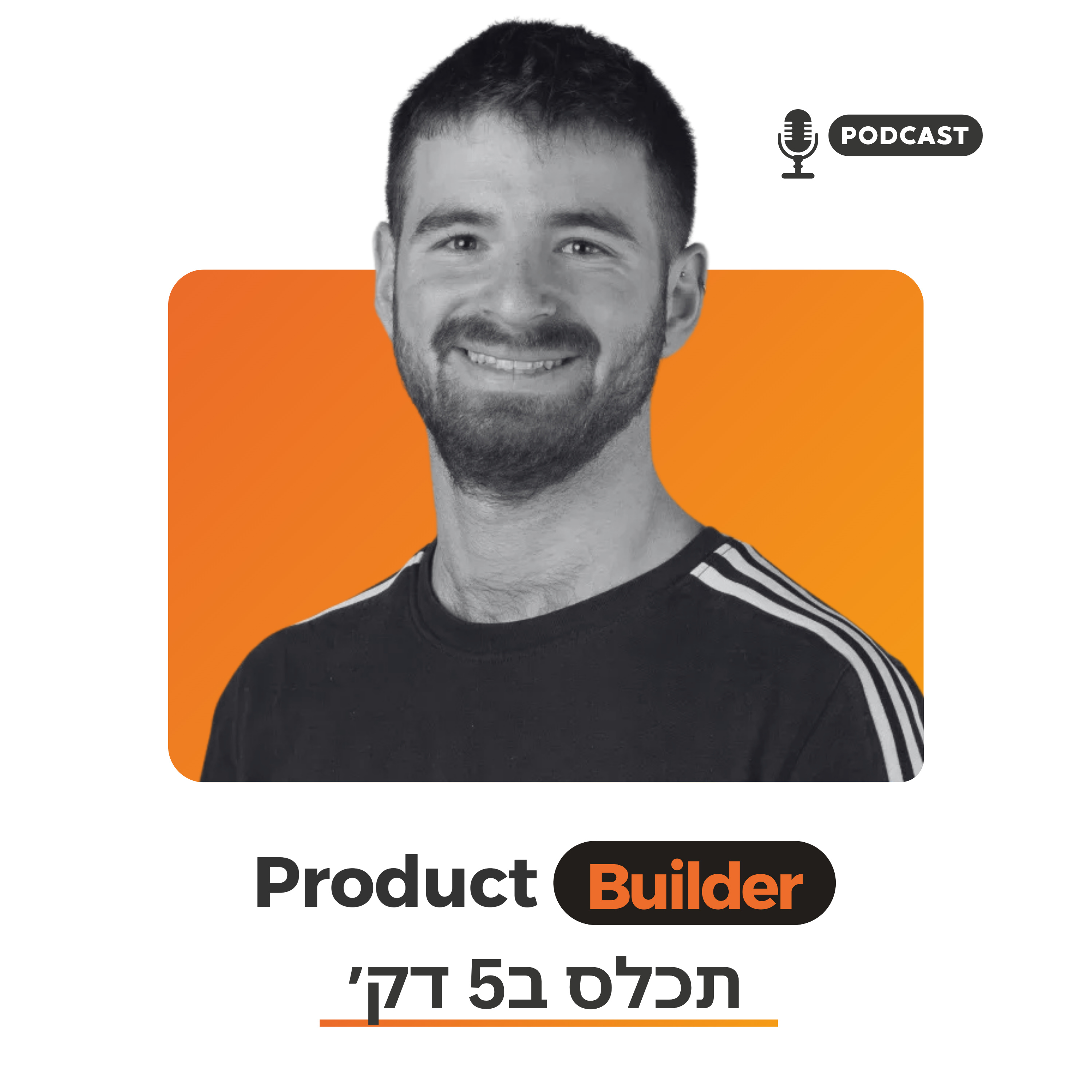
How to Build a Copilot for Product Work — Zeevi Arnovitz (Wix)
Host: Eyal David · Guest: Zeevi Arnovitz · About the host
In this episode
- A good copilot rests on three pillars: general knowledge (onboarding, like a new hire), personal instructions (custom instructions), and context specific to each project.
- Without enough context, even the strongest model returns generic outputs — the real investment is in the context stage, like briefing an intern.
- Setting custom instructions solves the people-pleaser problem: you ask the model for pushback instead of flowing along with every idea.
- The practical architecture: one project that holds knowledge + custom instructions, and under it a separate chat for each product project.
- The copilot accompanies the entire product lifecycle — from discovery, through wireframes and challenges, planning the test, all the way to shipping the product.
- The tooling landscape moves fast: at Wix they build in Gemini, Zeevi personally prefers ChatGPT, and every few weeks a new model (like Claude) changes the game.
Listen to this episode
Episode Description
Zeevi Arnovitz from Wix breaks down his method for building a copilot that accompanies product work end to end. Instead of treating AI as a one-off chat, he builds a permanent 'worker' based on three pillars — knowledge, personal instructions, and context — and relates to it like a genius intern who needs a good brief so it doesn't produce generic outputs.

Full transcript with speakers and timestamps
Selected quotes
“I really treat this thing like an intern working with me, and like a real intern — even if this intern is the most genius in the world, if you don't give enough context about what we're working on, its outputs will be generic.”
“The three important pillars of the copilot are general knowledge... I look at it as if you just hired someone new to your team.”
“Don't be a people pleaser, give me pushback.”
Questions & answers
What are the three pillars of a product copilot?
General knowledge (everything you'd give a new hire during onboarding), personal/custom instructions (how you want it to respond, including pushback), and setting up a project that centralizes both, with a chat under it for each task.
Why is context so important?
Because even a genius intern, if it doesn't get enough context about what you're working on and what problem you're solving, will return generic outputs. That's why you should invest most of the effort in the context stage.
How do you solve the model's people-pleaser problem?
Through personal/custom instructions — define up front that the model shouldn't flow along with every idea but should instead give pushback and challenge you.
What tools do you build the copilot in?
At Wix they build in Gemini; Zeevi personally likes to use ChatGPT; and he notes that Claude is changing the game too. The landscape refreshes every few weeks.
Across which stages does the copilot accompany you?
Across the whole project — from the discovery level, through the wireframes and the challenges, planning the test, and all the way to how the product ships.
Related Episodes
Alex Rif | How Do You Create Real Social Change?
01:02:24 · October 11, 2026
Alex Rif immigrated from Ukraine as a child and spent 20 years trying to be "just Israeli": Magen David Adom, officer training, the Civil Service Cade...

Why I Talk Less About Product Now | Coffee with Eyal
00:06:55 · October 7, 2026
"Coffee with Eyal" is a short, informal series in which Eyal David opens the mic over a cup of coffee and shares insights, things he is building and w...
What Does a Venture Capital Investor Really Look For? | Yael Schiff (Bessemer Venture Partners)
00:58:30 · October 4, 2026
Yael Schiff is an investor at Bessemer Venture Partners, mostly at Seed and Series A, in AI, infrastructure and cyber companies. Before that she spent...
No More Moats: How Harmony Reached 50 Customers Without a Single Salesperson | Ran Ribenzaft (Harmony)
01:00:56 · September 24, 2026
Ran Ribenzaft, Co-Founder and CTO of Harmony (and formerly founder and CTO of Epsagon, sold to Cisco for $500M), is an unusual CTO: 90% of his time go...