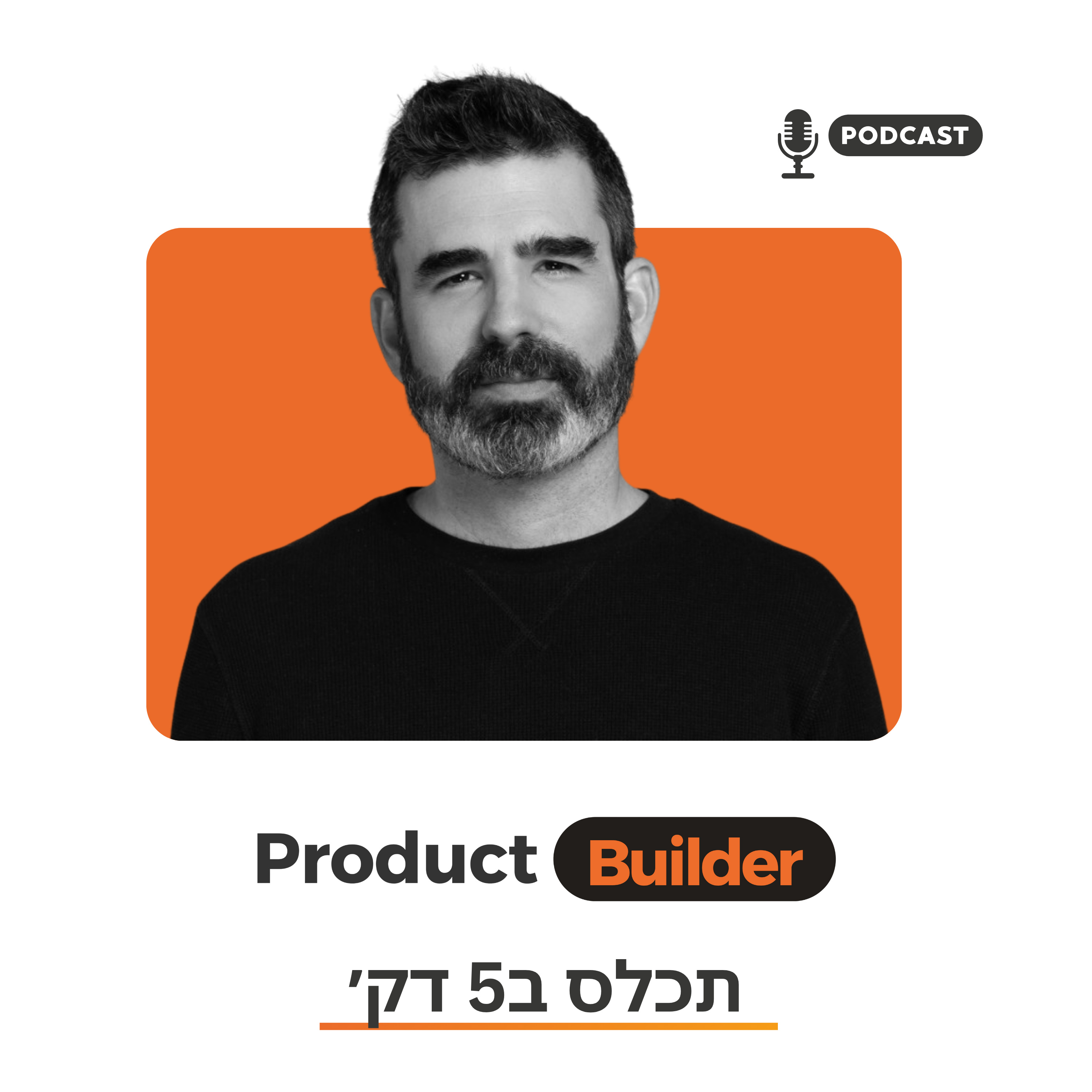
Shai Shafrank | Empathy | Takhles Episode: How Did Fiverr Break the $5 Barrier?
Host: Eyal David · Guest: Shai Shafrank · About the host
Fiverr broke its $5 model by changing the company's story: from "what can you get for five dollars" to "how do you buy a service the way you buy a product" (service is a product). According to Shai Shafrank, former Head of Product at Fiverr and now CPO at Empathy, the model that was the company's DNA was also its biggest source of friction, and the deciding signal was custom offers: a feature they tried to hide that still made more money than the entire marketplace.
In this episode
- When the business model is also the company's identity, its biggest problem can contain its biggest opportunity, but the change requires a new story, not just a new feature.
- Fiverr's new story was "service is a product": not what you can get for five dollars, but how you buy a service the way you buy a product, in one click.
- The "I will" is the core that survived the change: the freelancer states up front what they'll do and at what price, instead of a brief, a negotiation and a hiring process.
- Custom offers was the signal: they tried to hide and shrink the feature, and it still made more money than the entire marketplace, because it was what people needed.
- When the small features that work around the model aren't enough, you have to rip it off like a band-aid and make one big move.
- A move like this is measured on spend, quality, satisfaction and retention, without hurting conversion, and all before a funding round.
Listen to this episode
Episode Description
In a short clip from the full live conversation, Shai Shafrank describes how Fiverr dealt with the problem that was also its biggest opportunity: a marketplace whose whole identity was "everything for $5", while sellers couldn't sell the way they wanted and buyers couldn't buy the way they wanted. He walks through the fears around breaking the model, the custom-offers signal, and the new story that replaced the $5: "I will do something for something" and "service is a product", buying a service in one click without a brief, negotiation or hiring.

Chapters
Full transcript with speakers and timestamps
Selected quotes
“No matter how much we hid it, it made more money than the entire marketplace, because that's what people needed.”
“The story isn't what you can do for five dollars, but how you can buy a service the way you buy a product.”
“We don't want hiring, we want one-click. One-click purchase.”
Questions & answers
Why was it hard for Fiverr to break the $5 model?
Because the model was the company's core and essence, even in its name. On the other hand it created a lot of friction: sellers couldn't sell the way they wanted and buyers couldn't buy the way they wanted, and the company wanted to move up market to quality services and deliverables.
What was the signal that the model had to change?
The custom offers project, where a seller can send a buyer a price quote for any amount. There were many fears around it and they tried to hide it, yet it made more money than the entire marketplace.
What does "service is a product" mean?
It's Fiverr's new story after the $5: buying a service the way you buy a product, in one click, with the freelancer stating up front what they'll do and at what price, with no brief, negotiation or hiring.
What remained of Fiverr's original brand?
The "I will". The line went from "I will do something for five dollars" to "I will do something for something", and the "I will" is the predefined promise that sets Fiverr apart from working with a freelancer the usual way.
Which metrics was the move measured on?
Raising spend in the marketplace, raising quality, satisfaction and retention, while not hurting conversion, at a time before a funding round when every metric had to go up.
People & resources mentioned
Related Episodes
Aviv Blumstein (Mr. Japan): Building a Business on Word of Mouth
00:53:19 · July 5, 2026
Aviv Blumstein was a product manager in Tel Aviv high-tech. After a trip to Japan he wrote a detailed post in a Facebook group, and the post went vira...
What in Your Business Really Runs Without You? | Or Hakim (Videocast)
00:58:13 · June 14, 2026
Or Hakim is founder and CEO of Videocast, podcast production studios plus a guidance service that builds in-house studios for companies, organizations...
Neta Coral | Takhles Episode: Start With the Business Reason, Only Then the Solution
00:04:03 · December 3, 2025
A Takhles episode with Neta Coral of Apiiro: before jumping to a solution in a new initiative, identify why you're entering it at all. Neta describes...

Building a GenAI Product From Scratch for a Traditional Sports-Betting Industry — and the Pivot That Followed
00:45:53 · November 12, 2025
Itzik Adziashvili, a GM and veteran product manager at LSports, tells the story of how a bootstrapped company of nearly 400 people builds the data inf...