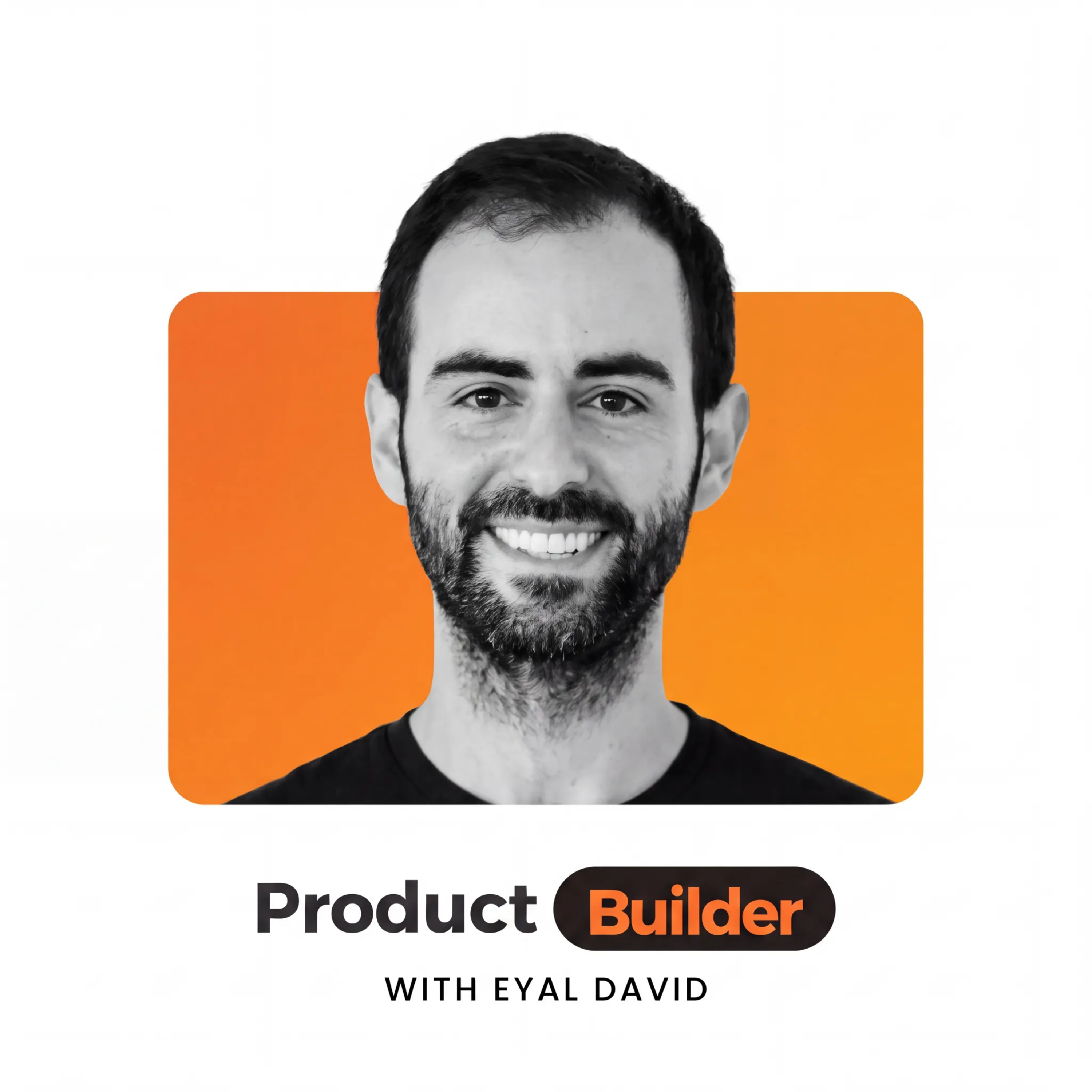
No More Moats: How Harmony Reached 50 Customers Without a Single Salesperson | Ran Ribenzaft (Harmony)
Host: Eyal David · Guest: Ran Ribenzaft
In this episode
- A CTO spending 90% of his time on Go-To-Market: at Harmony, Ran proved you can reach 50+ customers in year one with no salesperson — with the founders themselves leading the sale.
- The moat test: “if I erase every piece of AI from the pitch — can I still sell?” The real advantage is data, deep enterprise integrations and solving a genuine pain, not the AI itself.
- 100 discovery calls before there's a product: open-ended calls (“what's on your plate?”) become data research that sharpens the ICP — US tech companies of 500–5,000 employees.
- The era of mockups is over: in the AI era you build a real product and show a demo instead of wireframes and spec documents — Demo-Market-Fit.
- “No more moats”: when technology and product are cloned fast, what's left as a durable advantage is founders, brand and execution.
Listen to this episode
Episode Description
Ran Ribenzaft, Co-Founder and CTO of Harmony (and formerly founder and CTO of Epsagon, sold to Cisco for $500M), is an unusual CTO: 90% of his time goes to Go-To-Market. In its first year Harmony reached more than 50 customers — with no salesperson at all to start. This episode is a practical master-class on what happens when technology and product are no longer a moat: how to run 100 discovery calls with no product, how calls turn into data research, and what's actually left for you to sell.

Chapters
- 0:44 · Who Ran is: from Epsagon (→ Cisco) to Harmony
- 1:58 · The unusual combo: a CTO doing Go-To-Market, 90% of the time on GTM
- 3:35 · GTM and first customers — 50 customers with no salesperson
- 5:02 · Why the name Harmony: a memorable brand and the race for a domain
- 6:14 · Why the IT market, and Mac vs PC in the enterprise
- 7:01 · How they started: setting expectations as second-timers
- 8:06 · The thesis: if I erase every piece of AI — can I still sell?
- 8:54 · Driving a wedge with data and integrations; the competition = ServiceNow
- 10:56 · Culture: what they kept and changed from Epsagon — accountability
- 13:47 · Exploration then Validation; Top-down vs Bottom-up
- 15:07 · Big deals and ICP: two quarter-million-dollar deals
- 16:52 · 100 discovery calls in three-to-four months
- 17:33 · Why not start with Israeli customers
- 21:03 · Manual outbound on LinkedIn
- 22:04 · How to run a discovery call: 'what's on your plate?'
- 25:00 · Summarizing calls in the transcript era: product people as data researchers
- 27:07 · Converging on the ICP: tech companies, 500–5,000 employees, US
- 29:24 · From validation to selling: the era of mockups is over
- 30:19 · Demo-Market-Fit and a 'spaceship product'
- 32:34 · When to raise money and on what promise
- 33:52 · No more moats: what's left as an advantage
- 35:24 · A founder's brand and networking in the right dose
- 36:40 · The 'HaMeyasdim' podcast and PMF for niche content
- 44:36 · Outbound automations: scanning competitors' tenants and engagement
- 47:43 · A new role: AI Engineer under the CTO/CEO
- 48:26 · How to get out of a pilot: POC discipline
- 51:02 · Israeli customers and Dual Motion; SDRs from Day 1
- 54:46 · Advice for a small business and why you must approach $1M
- 58:00 · The builders' challenge: business thinking vs startup thinking
- 59:17 · The dream: Israeli pride in the next big thing
Full transcript with speakers and timestamps
Selected quotes
“There are no moats anymore, the story's over.”
“If I erase literally every piece of AI that's in my pitch, can I still sell the product?”
“The era of mockups is over, the era of wireframes is over, the era of the spec document is over.”
Questions & answers
What does Harmony do?
Harmony is a startup in the IT/ITSM space that sits on top of — and sometimes replaces — systems like ServiceNow, leveraging data and deep enterprise integrations. Ran Ribenzaft is Co-Founder and CTO, and his partner Nitzan leads GTM in the US.
Who is Ran Ribenzaft?
An Israeli entrepreneur, Co-Founder and CTO of Harmony. He previously founded Epsagon with Nitzan, which was sold to Cisco for $500M. He hosts the 'HaMeyasdim' (The Founders) podcast, is active in the startup community, and invests.
How did Harmony reach 50 customers with no salesperson?
The founders led the sale themselves: ~100 discovery calls, manual outbound on LinkedIn, focus on a precise ICP (US tech companies of 500–5,000 employees), and a fast move from validation to a real demo.
Why does Ran say 'there are no more moats'?
Because in the AI era technology and product are cloned quickly, so they're no longer a moat. What remains a durable advantage is founders, brand and execution.
People & resources mentioned
People
- Ran Ribenzaft — Co-Founder and CTO at Harmony
- Nitzan — Ran's partner; leads GTM at Harmony (formerly CEO of Epsagon)
Companies & orgs
- Harmony
- Epsagon
- Cisco
- ServiceNow
- Salesforce
- NetSuite
- Zendesk
- Jira Service Management
- Apollo
Tools
- Claude / Claude Code
- Gemini
- ChatGPT
- HaMeyasdim (podcast)
Related Episodes
Peter Paltchik: Wants to Be Israel's Most Influential Athlete
00:54:27 · September 6, 2026
Peter Paltchik — two-time Olympic judo medalist, entrepreneur, speaker and investor — on what really sustains people who build over the long haul: the...
Tony Arad Felik | Not Just Surviving AI — How to Thrive in It
01:06:04 · July 28, 2026
Tony Arad Felik, a mentor to managers in high-tech and a former R&D Director, on management in an era when roles, hierarchies and expectations are shi...

Aviad Harel | Team8 | How to Build a Thesis About the Future Worth Millions
00:54:32 · June 22, 2026
Aviad Harel, Managing Partner at Team8 and previously a co-founder of Sisense, on how to build startup theses at the earliest stages — before product,...
Amit Slutzky | Trullion | “I Left Figma and Went Into the Field — It Changed Everything”
00:41:22 · February 24, 2026
Amit Slutzky, Director of Product at Trullion, on one of the most important muscles for product people: understanding what's really going on with the...