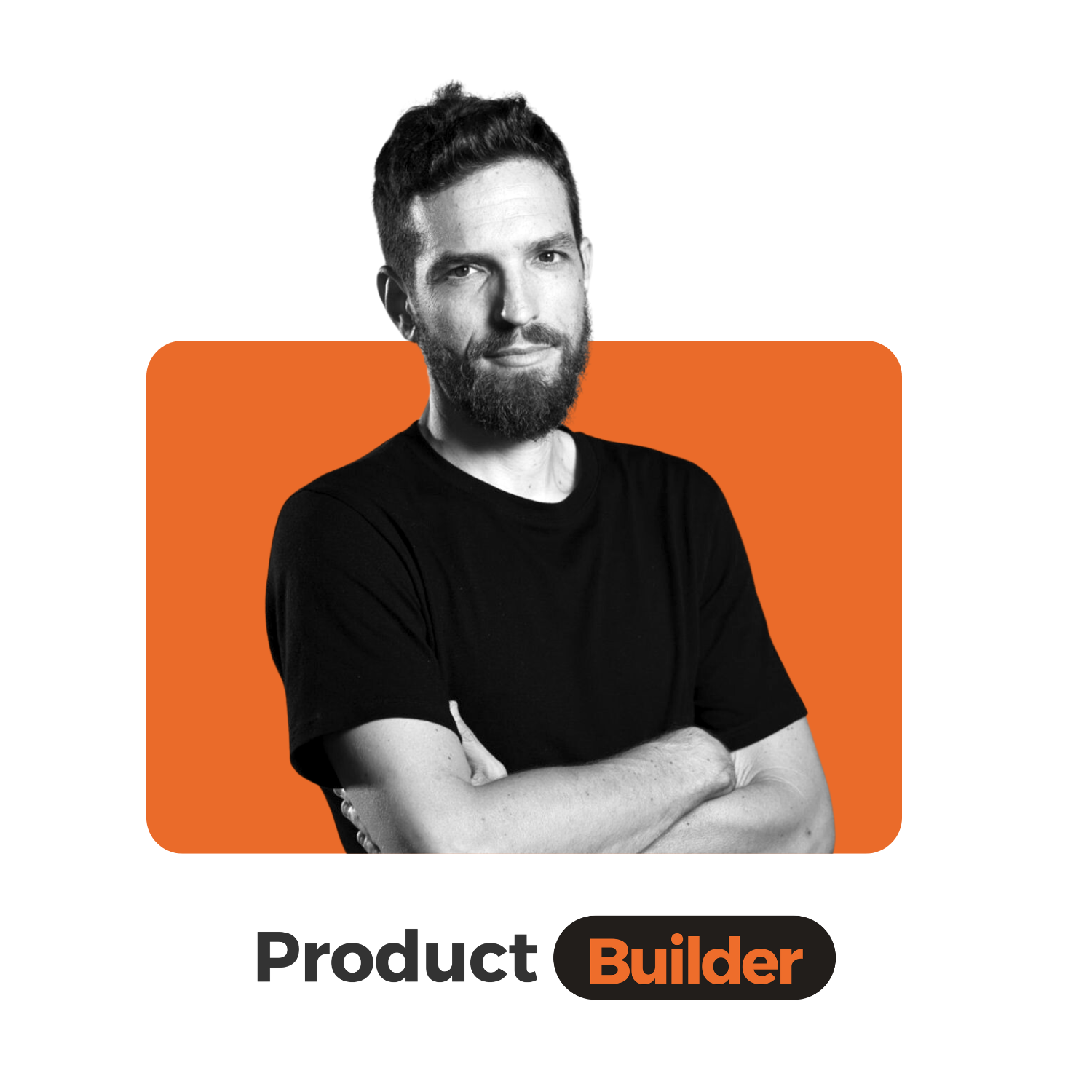
From Nuts and Bolts to Big Picture: Paid Marketing, Product Thinking and the Art of Zooming Out
Host: Eyal David · Guest: Guy Rozman · About the host
In this episode
- An excellent product (or marketing) person connects vision to numbers and to user behavior, and knows how to rally developers and designers around the vision — not just to build features.
- Efficiency is the name of the game: it's easy to waste money on advertising; the hard part is connecting every dollar of investment to the business numbers and seeing what really moves the needle.
- Building features that users don't use confuses both the marketing and the user, and wastes energy on maintenance that doesn't bring in money.
- The best way to connect to the audience is to read reviews and do user testing — to see which words people use to describe their experience, instead of inventing marketing language.
- Habits like a weekly zoom-out, an organized presentation with results/insights/next steps, and the need to explain the work to someone outside the field — force strategic and sharp thinking.
- AI is already accessible to everyone and will have more and more impact; it's worth breaking your work down into its components and bringing AI tools into every place you can already now.
Listen to this episode
Episode Description
Guy Rozman, owner of Mediaflowzz, specializes in Paid Marketing and building Customer Acquisition processes for startups and tech companies targeting a global market. In conversation with Eyal, he lays out his journey from digital marketing in the early days, through Fiverr and Keylogic, to independent consulting — and distills what he's learned about connecting the nuts and bolts of advertising with strategic and business thinking. The core of the episode is the fast switch between 'broad' and 'narrow': how not to drown in the details, how to distill insights from the numbers, and how to design habits that force you to take a step back and see the big picture.

Full transcript with speakers and timestamps
Selected quotes
“Wasting money on advertising is very easy, anyone can do it easily, but what you must do is essentially connect this investment to the numbers of the business, and see what really moves the needle.”
“Strategic thinking is more thinking about the what or the why, and less thinking about the how.”
“Once we work in a structure like that, we have to take a step back for a moment, because otherwise, from all the trees we won't see the forest.”
Questions & answers
What does Mediaflowzz actually do?
The company specializes in Paid Marketing and builds for its clients — mainly startups and global tech companies — a four-stage Customer Acquisition process: deep Research, building/creating the ads and campaigns, going live, and ongoing optimization.
What are the four stages of the Customer Acquisition process?
1) Research — deep research of the market, competitors, keywords, audiences and funnel, ending in a media plan and budget allocation across channels. 2) Building/creating — building the ads, messages, videos and campaign architecture. 3) Going live — starting the spend, getting traffic and feedback. 4) Optimization — an ongoing stage that never ends, in which you improve 'the machine' based on inputs from the world, the product and sales.
What sets a good product person apart, according to Guy?
A clear vision of an ideal product, a deep understanding of the numbers and behavior, the ability to connect the two into a roadmap, and leadership that rallies the team — developers and designers — to believe in the vision and execute it. And also: the ability to simplify and communicate.
How does Guy overcome his tendency to be 'in the nuts and bolts' rather than the big picture?
He developed habits that force him to take a step back: the initial brief with the client, a weekly (or monthly) zoom-out with a presentation organized into results, insights and next steps, and the need to present the work to someone outside the field — which requires rising to a high level.
What is the book that most influenced Guy?
Rework, by the people who made Basecamp, which talks about how to work efficiently. It's especially relevant because his company is work-from-anywhere / remote-only, which requires smart design of work processes and culture.
Related Episodes
No More Moats: How Harmony Reached 50 Customers Without a Single Salesperson | Ran Ribenzaft (Harmony)
01:00:56 · September 24, 2026
Ran Ribenzaft, Co-Founder and CTO of Harmony (and formerly founder and CTO of Epsagon, sold to Cisco for $500M), is an unusual CTO: 90% of his time go...
Tony Arad Felik | Not Just Surviving AI — How to Thrive in It
01:06:04 · July 28, 2026
Tony Arad Felik, a mentor to managers in high-tech and a former R&D Director, on management in an era when roles, hierarchies and expectations are shi...
Aviad Harel | Team8 | How to Build a Thesis About the Future Worth Millions
00:54:32 · June 22, 2026
Aviad Harel, Managing Partner at Team8 and previously a co-founder of Sisense, on how to build startup theses at the earliest stages — before product,...
"Stop Thinking Like an Employee. You're a Startup." | Lior Frenkel (Adaptation)
01:08:36 · May 17, 2026
Lior Frenkel, founder of Adaptation and author of "The Little Book for the New Manager," argues you should look at your career as a startup — with fea...