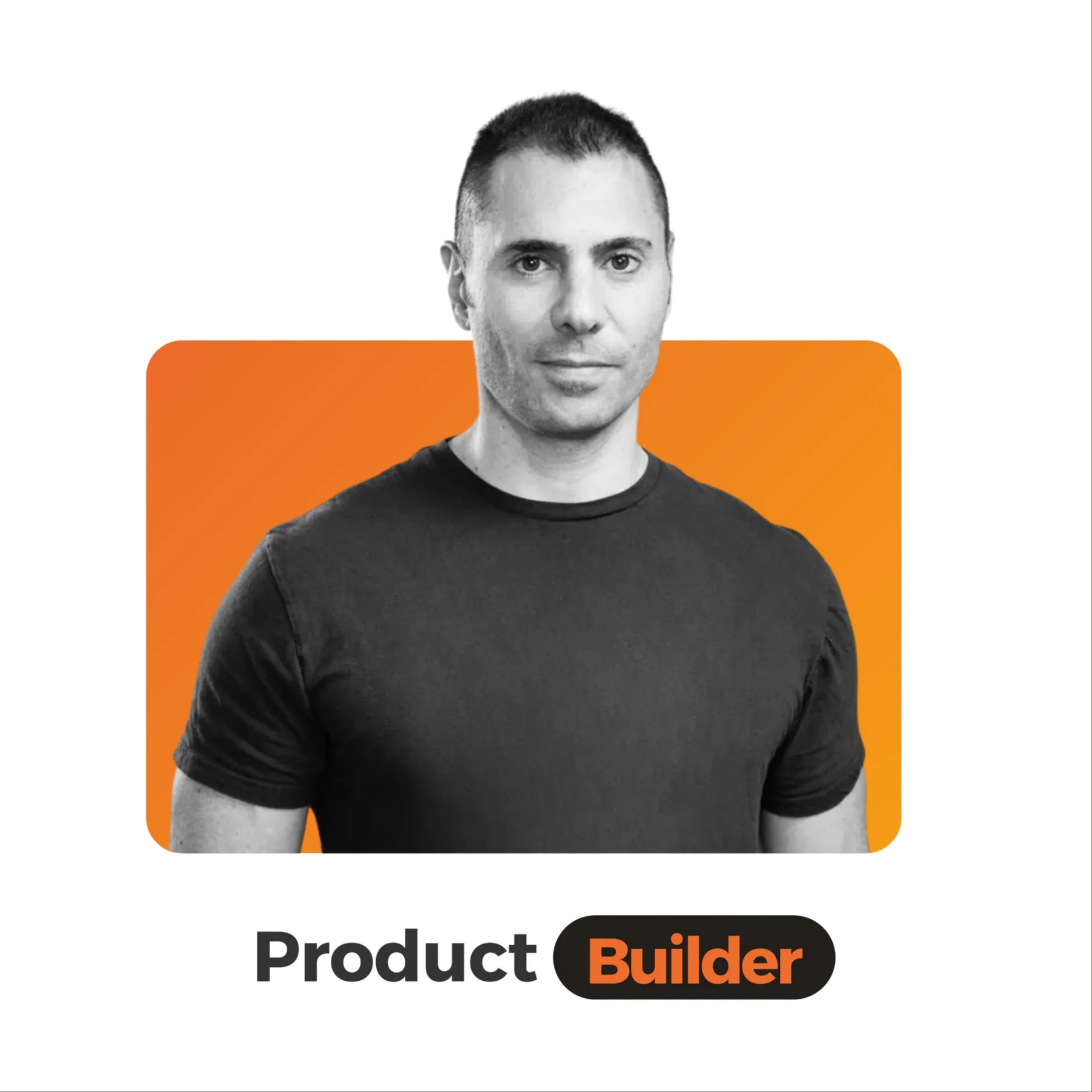
David Ben-Basat | Fireblocks | How Do You Build Winning Teams?
Host: Eyal David · Guest: David Ben-Basat · About the host
David Ben-Basat, VP Platform Engineering at Fireblocks, explains how to build an engineering organization that grows without breaking: get one team working right, then grow another. In his view, what sets a strong developer apart is tying their work to a business KPI and measuring impact, and a good manager grows people through weekly one-on-ones anchored in real work.
In this episode
- A team's success isn't how many features got checked off, it's whether the KPI it's meant to move actually moved. David's example: a team building an internal dev environment is measured by R&D's usage of it, not by its feature list.
- Going from individual contributor to team lead isn't a promotion, it's a different job. The only right reason to do it is a passion for growing people, and it should start as a three-month experiment where failing is allowed.
- A growing organization needs senior teams first, soft skills included, and only once a team is stable do you add one junior at a time. Doubling a team in one go is a recipe for trouble.
- Feedback only works when it's tied to the last week's work. Pick one 'big rock' to improve together with the employee, and connect a real case to it in every weekly one-on-one.
- Developers own their code after it hits production: monitoring, behavior and impact on the KPI. A sign of a scalable organization is that more and more developers, not just the veteran managers, handle incidents.
- Instead of a short-term fix followed by an unrelated long-term solution, think long term and deliver value incrementally, so every step advances the vision.
Listen to this episode
Episode Description
David Ben-Basat started as a QA engineer in 2002, went through Dell, Quest and Fanbox, and today leads platform engineering at Fireblocks, a company that secures digital assets for thousands of customers. Talking with Eyal David, he explains why he sees product and R&D as a single entity, why developers own their code even after it ships to production, and how he interviews candidates with one question: what impact did you create? David details how to choose a team lead (a passion for growing people, plus a three-month trial period), how to build a senior team before hiring juniors, how to give every squad a measurable strategy instead of a shopping list, and how the weekly one-on-one becomes the main coaching tool. He closes with the skills he looks for in a product manager: continuous visibility, strategic thinking, non-functional requirements, planning, and exposing the team to the business.

Chapters
- 00:50 · From QA to development: a holistic view and owning code in production
- 03:38 · Product and R&D as one entity
- 04:57 · The one interview question: what impact did you create?
- 07:44 · What Fireblocks does and its scale challenges
- 10:58 · A VP Engineering's day-to-day
- 14:26 · Choosing a team lead: a passion for growing people and a trial period
- 21:13 · Team structure: seniority first, juniors in measured doses
- 23:39 · A measurable strategy for every squad instead of a shopping list
- 28:48 · One-on-ones, the big rock and leaving the comfort zone
- 38:03 · The most important product manager skills
- 43:04 · Infra teams, incidents and 'production is a reflection'
Full transcript with speakers and timestamps
Selected quotes
“Going from IC, from individual contributor, to manager is not a promotion, it's a different role.”
“The moment something goes to production, that's actually where the work begins.”
“Production is a reflection. As we say, under stress we see the real picture.”
Questions & answers
What question does David Ben-Basat ask job candidates?
Just one: what impact did you create at the places you worked? He says developers tend to talk about technical skills, but what an organization cares about is the ability to move a business KPI and measure it.
How should you choose a team lead, according to David Ben-Basat?
First ask why the candidate wants the role. The right answer is a passion for growing people, since influence and decision-making can also be reached as an IC. Then run a trial period of about three months, with clear goals and support, where failing is allowed without a sense of failure.
When is the right time to hire junior engineers?
Only once the team is stable and built from senior people, both technically and in soft skills. Even then, hire in measured doses: a stable team of three hires a fourth, not three more at once.
What does an effective one-on-one look like?
It starts with building trust, moves to agreeing on one weakness whose improvement will create the most impact, and each week ties it to real work, such as a conversation with a peer that happened that week. Feedback flows both ways, and the performance review is just a formalization of what was already said.
What skills does David Ben-Basat look for in a product manager?
Working closely with R&D with shared accountability, continuous visibility, strategic thinking instead of a shopping list, working by KPIs, attention to non-functional requirements and tech debt, planning, and exposing the team to the business.
People & resources mentioned
Companies & orgs
- Fireblocks
- Dell
- Quest
- Fanbox
- Bank of New York
- Visa
Related Episodes
One Metric to Align the Org: How AppsFlyer Turned Product Adoption into Retention
00:05:19 · September 10, 2025
Rachel Frenkel BenHanoch breaks down a case study from AppsFlyer on how to build impact across the entire organization through a single metric of Prod...
Asaf Shochet Avida & Stas Wishnevetsky | Product and R&D, All on the Table: A Special Episode
00:48:40 · July 22, 2024
A special three-way episode: Eyal David hosts Asaf Shochet Avida, Front End Tech Lead at accessibility company Evinced, and Stas Wishnevetsky, Directo...

From Zero to $2 Billion in Two Years, in a Saturated Market | Coffee with Eyal
00:08:21 · October 22, 2026
In the second episode of "Coffee with Eyal", Eyal David breaks down the story of David, a consumer company that jumped to a valuation of over 2 billio...
How Do You Create Real Social Change? | Alex Rif
01:02:24 · October 11, 2026
Alex Rif immigrated from Ukraine as a child and spent 20 years trying to be "just Israeli": Magen David Adom, officer training, the Civil Service Cade...