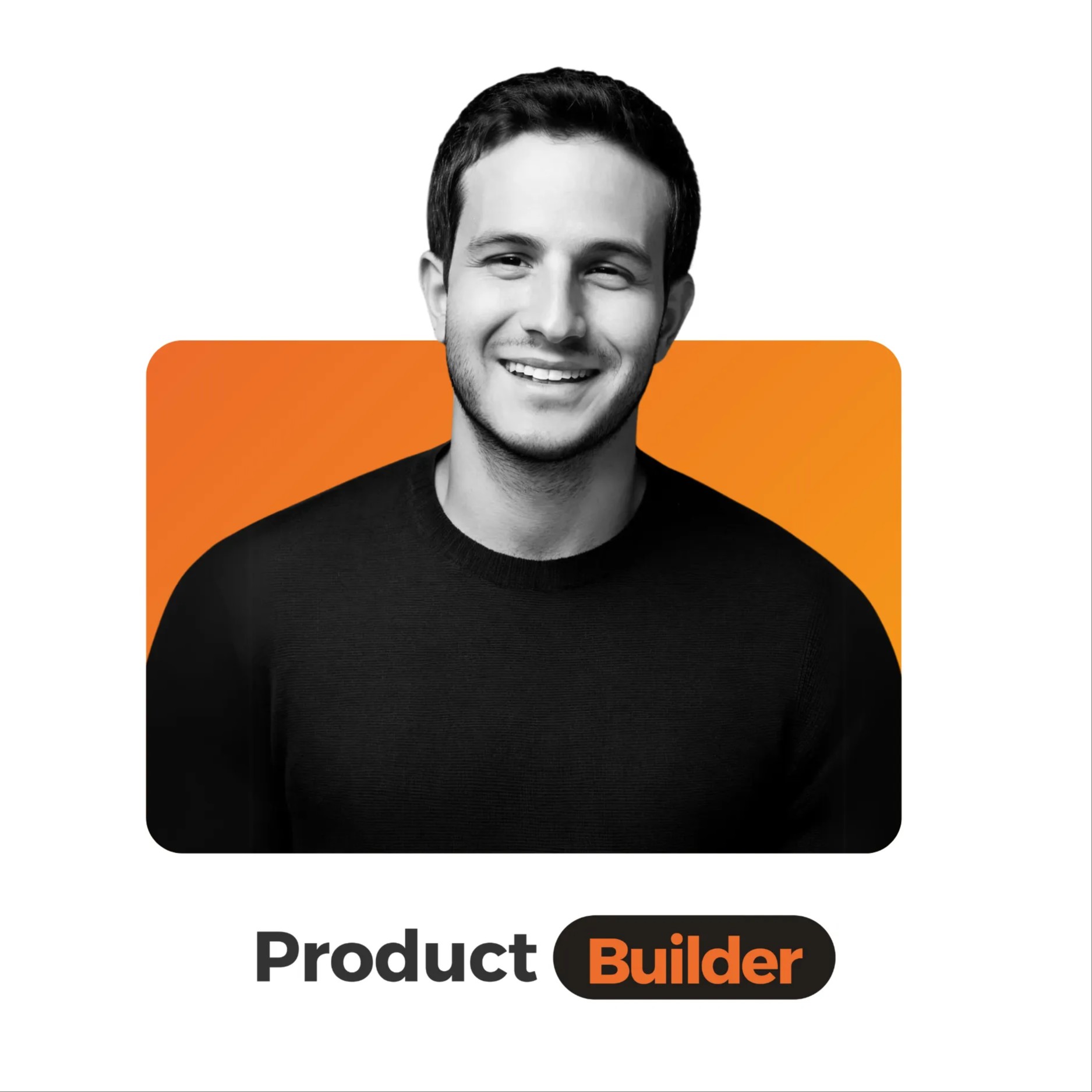
Why the Future of Enterprise AI Is Controllable Autonomy — Amnon Morag, VP Product at AI21 Labs
Host: Eyal David · Guest: Amnon Morag · About the host
In this episode
- The biggest value from AI in the coming years will come from autonomous systems that wrap the LLM — 'controllable, reliable and efficient' — and not necessarily from improving the model itself.
- The main barrier to enterprise adoption is reliability: a model that's right 90% of the time is unacceptable when mistakes aren't allowed.
- Product in a Deep Tech company lives in constant duality — being evidence-based and solving today's problems, while at the same time generating a vision and imagining needs the market can't yet articulate.
- Efficient models with a long context window (Jamba, 256K) are critical to the agentic future — for an agent's memory, learning from past examples, and analyzing large volumes of data.
- The most important skill for a product manager in the field: the ability to connect deep technological understanding with deep market understanding, and to move between the here-and-now and a vision two years out.
- The open-source strategy serves both the company and the community — recognition, learning from how people use and fine-tune the model, and low friction for organizations that want to experiment.
Listen to this episode
Episode Description
Amnon Morag, VP Product at AI21 Labs, talks about how to integrate AI tools into product management and why the future of enterprise AI lies in controllable autonomous systems that wrap around language models. He explains the reliability problem that blocks broad adoption in organizations, the Jamba model family with its long context window, and the unique challenge of product in a Deep Tech company that has to imagine the market's needs a year or two ahead. Throughout the conversation he also shares his personal journey — from a law student who tumbled into the company all the way to the role of VP Product.

Full transcript with speakers and timestamps
Selected quotes
“We're not trying to build AI in order to build Artificial General Intelligence; we want to create AI that solves real problems today and brings a lot of value.”
“I don't think we're overhyped, I think we're underhyped.”
“We don't always start from some problem we identify in the market and try to solve it. Sometimes we also want to invent a technological vision.”
Questions & answers
What does AI21 Labs do?
A seven-year-old Israeli AI company that builds large language models (LLMs), one of the only companies in the world with that capability. It was the first company after OpenAI to release an LLM the size of GPT-3, and the first to release a product based on Generative AI — Wordtune.
What's special about the Jamba models?
Jamba 1.5 (Large and Mini) is built on an architecture that isn't based only on Transformers, which makes it especially efficient at long context with a 256K window. The longer the context, the greater the gains in efficiency and speed, alongside performance that is comparable to or better than some of the competitors.
Why agentic systems and not just a better language model?
A language model predicts the next word token by token, so it struggles to plan, execute, correct itself along the way, and know how deep to search. An agentic system wraps the LLM, uses it as one tool out of a broad set, and enables controlled autonomy that breaks down a complex, multi-step problem in a way that provides guarantees an enterprise can rely on.
Which product skills are most important for someone who wants to get into the field?
The ability to connect very deep technological understanding with deep market understanding, and to move between the here-and-now that delivers value to customers today and a vision two years out. In addition — 'making things happen', managing interfaces in an informal but effective way, and people skills. The way to learn: play with all the tools and models out there.
Why does AI21 release models as open source?
The company lets you download the model weights under a license that permits experimental and commercial use up to a certain cap, and only sells a license to organizations above a revenue threshold. This brings community recognition, a lot of learning about how people use and fine-tune the model, and low friction for organizations to start experimenting.
Related Episodes
Aviad Harel | Team8 | How to Build a Thesis About the Future Worth Millions
00:54:32 · June 22, 2026
Aviad Harel, Managing Partner at Team8 and previously a co-founder of Sisense, on how to build startup theses at the earliest stages — before product,...
How to Build AI at the Edge of the Device — Ori Katz, Hailo
00:40:49 · March 5, 2026
Ori Katz, who leads the AI SoC domain at Hailo, tells the story of how an Israeli chip company became a serious player in AI at the edge — smart camer...
Tom Mayblum | MIND | When Is a Customer Conversation Worth More Than Data?
00:33:39 · February 9, 2026
Tom Mayblum, VP Product at MIND, in a short tachles episode on when a direct customer conversation is worth more than looking at the data — and when y...
Keren Wexler | Optimove | Product-Team Processes That Create Big Impact
00:44:13 · December 23, 2025
Keren Wexler, Senior Director of Product at Optimove, on product, teams and decision-making — and the point where process stops being bureaucracy and...