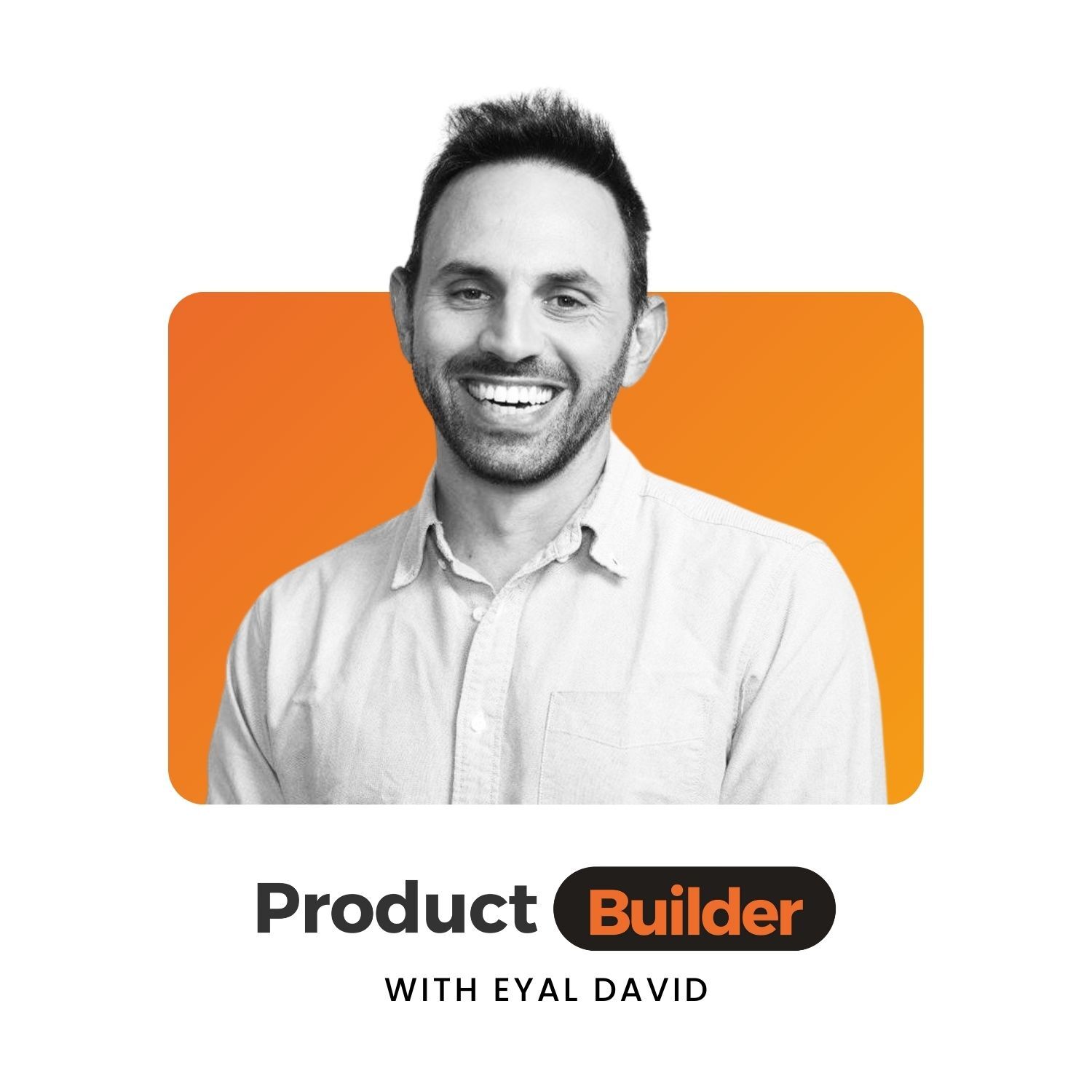
Oriel Raveh | Tippingpoint | How to Understand the Emotion That Drives Your User
Host: Eyal David · Guest: Oriel Raveh · About the host
Oriel Raveh, co-founder of Tippingpoint, product management and entrepreneurship lecturer, and a four-time VP Product, argues that users don't buy a product for its features or logo but for the emotion that drives them. So a product person's job is to find the emotional Why, understand the cognitive biases that shape decisions, and communicate value concisely, like a good Netflix trailer.
In this episode
- Users don't connect to features or a logo but to the emotion that drives them. At Woofy, "say hi to the dog" at the end of a support call reconnected customers to why they bought: to feel they take good care of their dog.
- The customer is right about the pain, not about the solution. Build what customers ask for and you get a feature that fits only that customer, at best.
- To make a customer switch products you must deliver significantly greater value, not similar value, and hit an underserved need. The truth comes through nuances like "this worries me a bit", not explicit words.
- Framing and anchoring shape decisions: Apple positioned the iPhone as a computer that fits in your pocket rather than an expensive phone, and choosing is easier when there's a point of comparison.
- Tell a story like a Netflix trailer: condense, leave deliberate gaps the brain wants to fill, and always answer what's in it for the other side.
- In a job interview, the failure question is an opportunity. Drive, motivation and the ability to learn from failure are worth more than years of specific experience.
Listen to this episode
Episode Description
Oriel Raveh tells how Woofy, a bootstrapped monthly dog-box venture he built in 2013, taught him the most important lesson of his career: a line like "say hi to the dog for me" at the end of a support call reconnected angry customers to the emotion that made them buy in the first place. From there he dove into behavioral economics, cognitive biases and negotiation. In the episode he covers anchoring and framing (Dan Ariely, the iPhone, Uber vs. Lyft), cognitive load and urgency, the triune brain theory and why the Why lives in the emotional brain, the gap between what customers say and what they need (Waze Later, Airbnb), and finally how to handle the uncomfortable questions in product job interviews.

Chapters
- 0:43 · Who is Oriel, and the product skills that matter most
- 2:56 · The lecture: how to crack success, and the Woofy story
- 5:41 · Woofy: a progress bar that looked like buttons, 2% complaints and "hi to the dog"
- 10:33 · The courier is part of the product: the lesson from Haim Romano
- 16:49 · Dan Ariely, anchoring and framing: the iPhone, Uber and Lyft
- 23:49 · Cognitive load, urgency and the pitch as a Netflix trailer
- 27:45 · The triune brain theory and why the Why lives in emotion
- 34:00 · The customer is right about the problem, not the solution; Waze Later
- 37:43 · Airbnb: going to users and repositioning around emotion
- 41:42 · Job interviews: the failure question, experience vs. drive, and free points
Full transcript with speakers and timestamps
Selected quotes
“He didn't buy the product because we had a nice logo or because we were nice guys.”
“The courier is an inseparable part of your product.”
“Success is a by-product of failure, not the other way around.”
Questions & answers
Who is Oriel Raveh?
Oriel Raveh is an industrial engineer, co-founder of Tippingpoint, which supports growth-stage tech companies and traditional companies, and a lecturer on product management and entrepreneurship. He has held four VP Product roles and founded several ventures, including Woofy, a monthly dog-box subscription service.
Why does Oriel argue that emotion matters more than features?
Because according to the triune brain theory, the Why lives in the emotional brain, and that's where decisions are made. People don't remember what you said but how you made them feel, so customers, investors and teams connect to the Why, not to the technical spec.
How do you identify the emotion driving a user in discovery interviews?
Listen actively for nuances, not just words, such as "this frustrates me a bit". According to Oriel, Gen AI doesn't replace this, because the truth is between the lines. An example of cracking it is Waze's Later feature, which solves the anxiety of being late, not just getting from A to B.
Which cognitive biases are relevant to product people?
Among others: anchoring and adjustment (Dan Ariely's Paris-Rome experiment), framing and positioning, cognitive load from too many options, and urgency cues like "only two left". Decisions almost never rest on a single bias.
How should you answer "tell me about a failure" in a product job interview?
Treat the question as an opportunity, not a threat. Share a real failure, what you learned and how you moved on, and show that you manage your ego rather than letting it manage you. There are also free points: arrive on time, dress well, smile and come prepared.
People & resources mentioned
People
- Oriel Raveh, co-founder at Tippingpoint and product management lecturer
- Haim Romano, former CEO of El Al and Partner
- Gal Bendek (Elementor)
- Dan Ariely
- Daniel Kahneman and Amos Tversky
- Simon Sinek
- Paul MacLean
- Marty Cagan
- Marc Andreessen
- Brian Chesky
- Paul Graham
Companies & orgs
- Tippingpoint
- Woofy
- Apple
- Uber
- Lyft
- Airbnb
- Couchsurfing
- Netflix
- easyJet
- Y Combinator
Books & media
- Thinking, Fast and Slow / Daniel Kahneman
- Predictably Irrational / Dan Ariely
- Start With Why / Simon Sinek
Related Episodes
Being Smart Isn't Enough. This Is How You Make Things Happen | Dor Atias
00:46:48 · August 19, 2026
Dor Atias, a co-founder and the CPO of Cycode, a security company that protects the development pipeline from prompt to production, describes his path...
"I was afraid AI would take my job. It sharpened it instead" | Shira Moyal (imagen)
00:43:40 · May 10, 2026
Shira Moyal leads a product team at imagen, a startup that built a personal AI model which learns a professional photographer's editing style and edit...
Amit Slutzky | Trullion | “I Left Figma and Went Into the Field — It Changed Everything”
00:41:22 · February 24, 2026
Amit Slutzky, Director of Product at Trullion, on one of the most important muscles for product people: understanding what's really going on with the...
Tom Mayblum | MIND | When Is a Customer Conversation Worth More Than Data?
00:33:39 · February 9, 2026
Tom Mayblum, VP Product at MIND, shares how he built a product organization from scratch at a cyber startup coming out of stealth, and why the challen...