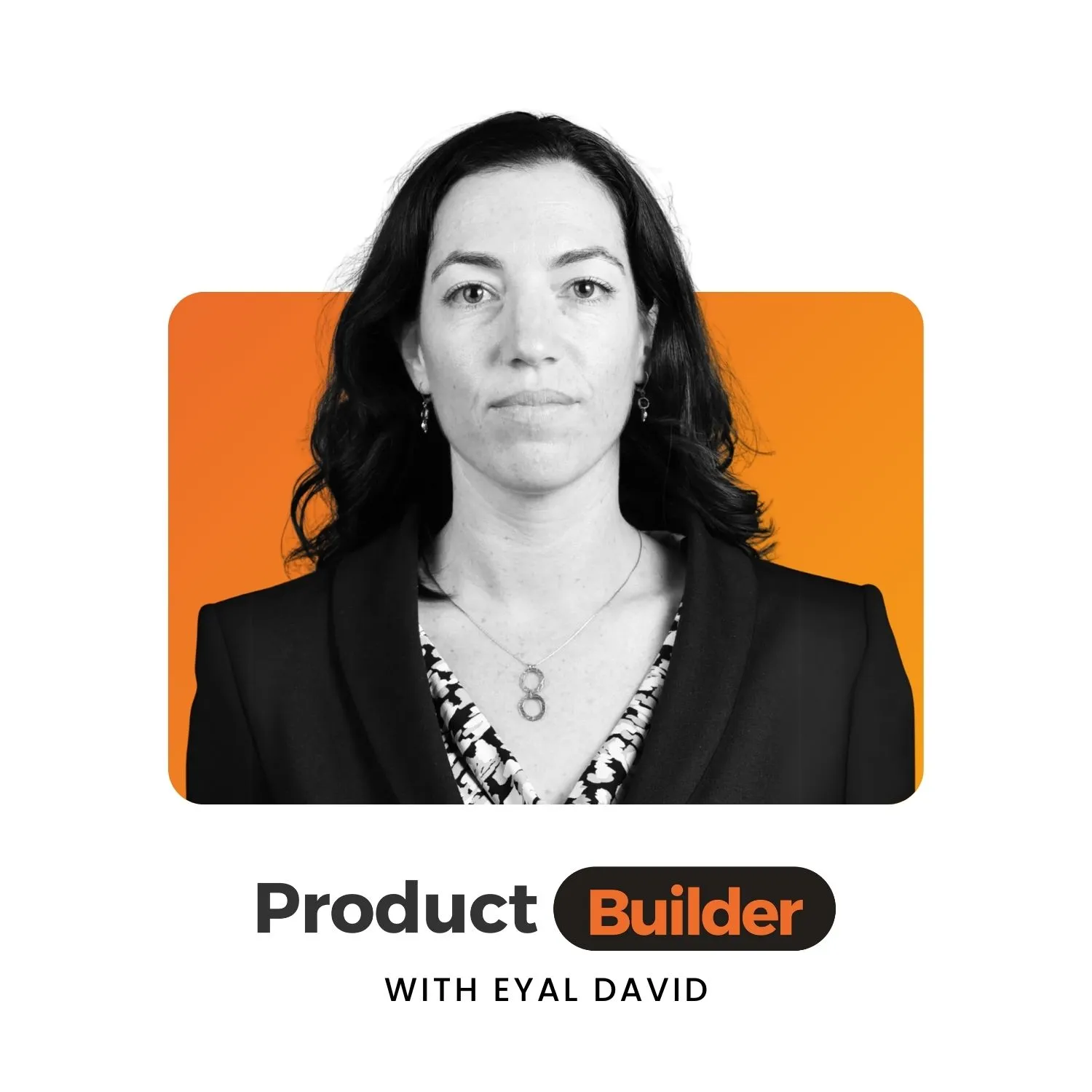
AI for Robotic Surgery: Tse'ela Mida of Intuitive
Host: Eyal David · Guest: Tse'ela Mida · About the host
In this episode
- da Vinci doesn't operate on its own — the surgeon sits at a console and controls four robotic arms; the robot doesn't tire or tremble and adds degrees of freedom and 3D vision, which translates into fewer complications, shorter hospital stays and lower costs.
- Wherever there's data there's an opening for AI: every robotic surgery is recorded automatically, producing video and robot data that are used to train models that come back to the surgeon to help them train and improve.
- Success metrics range from adoption and utilization (did the surgeon even connect to the system and access their data) to proving clinical value to the hospital — hospitalization days, bleeding events, readmissions — versus open and laparoscopic surgery.
- Medical regulation is about efficacy and safety, and a product that can't prove both "has no justification"; AI-specific regulation demands transparency — how the model was trained, how bias is prevented and how it's monitored — and the clinical decision stays with the doctor.
- Medical data is a barrier to entry for new players; Tse'ela built a "Data Factory" — a heterogeneous team with medical consultants and a clinical team that undergoes intensive training to label anatomy and surgical steps, both for model training and for quality control.
- The product skills she considers most important: strong communication at eye level and in each side's language (developers vs. doctors), the ability to move people to action, and focus — separating the essential from the secondary and prioritizing.
Listen to this episode
Episode Description
Tse'ela Mida is a product manager at Intuitive, the company behind the da Vinci robotic surgical system — installed in more than ten thousand hospitals across 70+ countries, with over 15 million robotic procedures performed. In the episode she describes her path from neuroscience, through 12 years at a radiology company where she started as a software tester and implemented systems inside hospitals, to managing AI products for robotic surgery. The conversation dives into how AI fits into a life-saving product, how you measure success when your users are surgeons, regulation as a product challenge, building a "Data Factory" — a clinical team that labels medical data to train models — and a future in which AI alerts in real time inside the operating room.

Full transcript with speakers and timestamps
Selected quotes
“When people hear that I work at a company that makes robots for surgery, they imagine a sci-fi movie, where the robot autonomously operates on the patients. The truth is that reality is very far from that. The idea of this system is to assist the doctor.”
“I really had no idea where to start — at least I understood that I had no idea, and that it was better for me to go out and learn, and ask people who have a bit more experience.”
“There's no doubt that today AI doesn't replace the doctor — the clinical, medical decision is in the end the doctor's.”
Questions & answers
What is da Vinci and how does it work?
da Vinci is Intuitive's robotic surgical system. The surgeon sits at a console in the operating room — not sterile and not next to the patient — and uses joysticks and pedals to control a cart with four robotic arms that enter the body with microscopic instruments. The robot mimics the movement of the hand without tremor or fatigue, and the surgeon views a 3D image — improving precision and safety.
How does AI fit into robotic surgery today?
Every robotic surgery is recorded automatically, and together with the data from the robot itself this is the basis for training models. Today AI is used retrospectively — to analyze the surgery, learn and improve — not in real time, mainly because of regulation. The near-term direction is real-time alerts, such as identifying a blood vessel the surgeon is too close to.
How do you measure success for a medical product like this?
On one side, adoption and utilization: did the surgeon connect to the digital platform, access the data from their surgeries and improve outcomes. On the other, clinical value for the hospital: in collaboration with hospitals, complementary data is collected from clinical systems to show reductions in complications, hospitalization days, bleeding events and readmissions compared with open and laparoscopic surgery.
How do you build a medical data team from scratch?
Tse'ela says that at first she had no idea where to start, so she went out to learn and asked everyone willing to talk to her. She mapped the roles, built relationships with consulting physicians for feedback and guidance, tried the platforms herself to get her hands dirty, and gradually built an established "Data Factory" — including a clinical team that undergoes intensive training to label medical data.
Who is a good fit for product management in medical technology?
Anyone drawn to the field who wants to do something meaningful — to wake up in the morning with satisfaction because these are life-saving products. It takes patience, since the feedback loop is slower and more controlled than in SaaS or gaming products, and onboarding is significant; people who come with a medical background and understand clinical workflows ramp up faster.
Related Episodes
How to Build AI at the Edge of the Device — Ori Katz, Hailo
00:40:49 · March 5, 2026
Ori Katz, who leads the AI SoC domain at Hailo, tells the story of how an Israeli chip company became a serious player in AI at the edge — smart camer...
Tom Mayblum | MIND | When Is a Customer Conversation Worth More Than Data?
00:33:39 · February 9, 2026
Tom Mayblum, VP Product at MIND, in a short tachles episode on when a direct customer conversation is worth more than looking at the data — and when y...
Keren Wexler | Optimove | Product-Team Processes That Create Big Impact
00:44:13 · December 23, 2025
Keren Wexler, Senior Director of Product at Optimove, on product, teams and decision-making — and the point where process stops being bureaucracy and...

Why "I Didn't Hear Anything New" Is the Product Leader's Real Win
00:04:07 · December 21, 2025
Noa Ganot breaks down why product managers fail to move the executive team: it's not a shortage of slide decks, it's the lack of a story that explains...