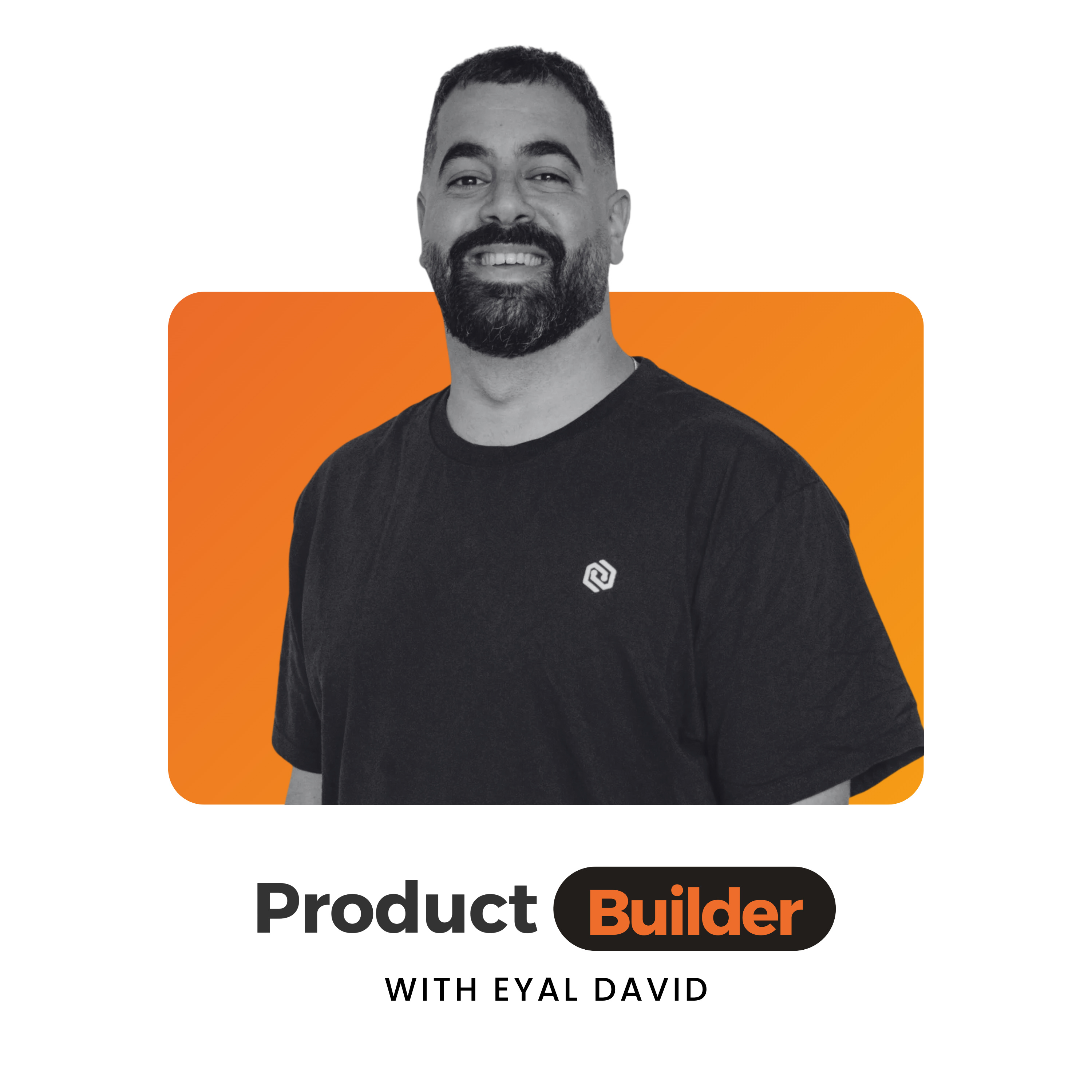
Being Smart Isn't Enough. This Is How You Make Things Happen | Dor Atias
Host: Eyal David · Guest: Dor Atias · About the host
Dor Atias, Co-Founder and CPO at Cycode (who also runs Engineering and Support), argues that in the AI era technical talent is not enough: the people who become meaningful in an organization are the ones who understand the customer and the business context, communicate well, and bring solutions rather than just problems. In his view, the way to create ownership and a high pace without burning people out is full transparency: showing employees the deals, the losses and the reasons behind the push.
In this episode
- In the AI era companies look less for the backend ace and more for people with a product mindset: someone who can take an idea and deliver it end to end, talk to the customer, build a demo, and come with solutions rather than just problems.
- A high pace only holds when people understand why they're running: Dor opens Salesforce in front of employees, explains why they won and why they lost, and builds ownership instead of empty pressure.
- The ownership test is simple: whoever comes with a problem also brings three proposed solutions and makes decisions, instead of just reporting status and waiting to be told what to do.
- A small loss to a new competitor isn't about 30 thousand dollars, it's a sign of things to come: it means the competitor has something you don't, and you need to understand what.
- Sometimes what closes a deal isn't a feature but respect: a sincere apology over dinner turned a customer who said "fuck Cycode" into a good relationship.
- Real AI-native requires secure, scalable, measurable infrastructure, with an AI Enablement lead who understands what's blocking each department; handing everyone Claude and declaring yourself AI-native isn't really AI-driven.
Listen to this episode
Episode Description
Dor Atias, a co-founder and the CPO of Cycode, a security company that protects the development pipeline from prompt to production, describes his path from Unit 81 through BlazeMeter to founding Cycode, and why what occupies him most today is people. He explains how he builds a culture of ownership through transparency (opening Salesforce in front of employees and explaining why they won and why they lost), why a small 30-thousand-dollar deal can be a warning sign about a new competitor, and how one dinner with an angry customer at Black Hat turned a loss into a good relationship. He talks candidly about impulsiveness, cultural gaps between Israelis and Americans, and setting expectations in charged conversations, and explains what companies look for in an employee in the AI era: a product mindset, communication skills, and solutions instead of problems. Finally he talks about feature ROI, managing by data rather than gut feeling, and why being AI-native takes infrastructure, not just Claude licenses.

Chapters
- 0:00 · Opening
- 0:34 · From Unit 81 to startups
- 1:55 · Customers before code
- 3:17 · Joining Cycode
- 4:29 · People before technology
- 6:36 · An incident and ownership
- 7:46 · The hiring DNA
- 9:07 · Business transparency
- 9:35 · Pace through context
- 11:03 · Communicating with customers
- 14:07 · Global communication
- 15:20 · AI and FOMO
- 16:35 · Beyond technical ability
- 17:33 · What Cycode does
- 19:16 · Should you read the code?
- 20:16 · Good foundations
- 22:14 · The inner engine
- 23:15 · Replicating ownership
- 24:12 · Small deal, big signal
- 26:22 · How the founders split roles
- 27:37 · A people person
- 30:13 · Controlling impulsiveness
- 32:54 · Employees' confidence
- 35:48 · Feedback for founders
- 36:52 · Product ROI
- 39:20 · Data, not gut feeling
- 40:08 · The urge to teach
- 43:54 · Spotting ownership
- 44:55 · AI Enablement
- 45:32 · Truly AI-native
- 46:12 · Wrap-up
Full transcript with speakers and timestamps
Selected quotes
“Bring me a solution too, don't just tell me what the problems are, I have enough problems in my life.”
“I don't care about some 30 thousand dollars. It's a lot more than 30 thousand dollars. It means there's a competitor here beating me on something I don't have.”
“You can't just give the whole world Claude and say, we're AI-native. That's just BS.”
Questions & answers
Who is Dor Atias?
Dor Atias is a co-founder and the CPO of Cycode, and in practice also runs Engineering and Support. He served as an officer in Unit 81 of the IDF Intelligence Corps, then spent five years at BlazeMeter as a developer, team lead and group lead, through its acquisitions by CA Technologies and Broadcom.
What does Cycode do?
Cycode protects developers and the development pipeline: from the moment a person writes code or a prompt until the code reaches production, in one platform that shows a large organization where the risk is and what needs fixing. The company started about seven years ago by protecting the source control systems themselves (GitHub, GitLab), and has roughly 120 to 130 employees across the US, Israel and Europe.
What should someone who wants to be meaningful in an organization do differently in the AI era?
According to Dor, knowing how to write code isn't enough. You need a product mindset, the ability to deliver an idea end to end, the interpersonal skills to talk with customers and with teams in other countries, and above all to come with solutions and make decisions instead of only raising problems.
How does Dor build a culture of ownership without burning people out?
Through transparency: almost every week or two he goes over the deals in Salesforce with employees, explaining why they won, why they lost and what it means for the business. At the same time he pays attention to small signs in people's mood, and after a tough weekend incident he gave the team two days off.
How does Dor handle his impulsiveness in charged conversations?
He sets expectations at the start of the conversation, openly saying the topic hurts him and that he's not at his calmest, instead of staying silent and then exploding. On Slack he sometimes runs messages through a chatbot to soften the tone, and he prefers face-to-face or Zoom conversations when there's a risk of misunderstanding.
People & resources mentioned
People
- Dor Atias — Co-Founder & CPO at Cycode
- Lior — Co-Founder & CEO of Cycode
- Ronen — Co-Founder at Cycode
Companies & orgs
- Cycode
- BlazeMeter
- CA Technologies
- Broadcom
- Startup Nation Central
- Unit 81 (IDF Intelligence Corps)
Related Episodes
Alex Rif | How Do You Create Real Social Change?
01:02:24 · October 11, 2026
Alex Rif immigrated from Ukraine as a child and spent 20 years trying to be "just Israeli": Magen David Adom, officer training, the Civil Service Cade...

Why I Talk Less About Product Now | Coffee with Eyal
00:06:55 · October 7, 2026
"Coffee with Eyal" is a short, informal series in which Eyal David opens the mic over a cup of coffee and shares insights, things he is building and w...

What Does a Venture Capital Investor Really Look For? | Yael Schiff (Bessemer Venture Partners)
00:58:30 · October 4, 2026
Yael Schiff is an investor at Bessemer Venture Partners, mostly at Seed and Series A, in AI, infrastructure and cyber companies. Before that she spent...
No More Moats: How Harmony Reached 50 Customers Without a Single Salesperson | Ran Ribenzaft (Harmony)
01:00:56 · September 24, 2026
Ran Ribenzaft, Co-Founder and CTO of Harmony (and formerly founder and CTO of Epsagon, sold to Cisco for $500M), is an unusual CTO: 90% of his time go...