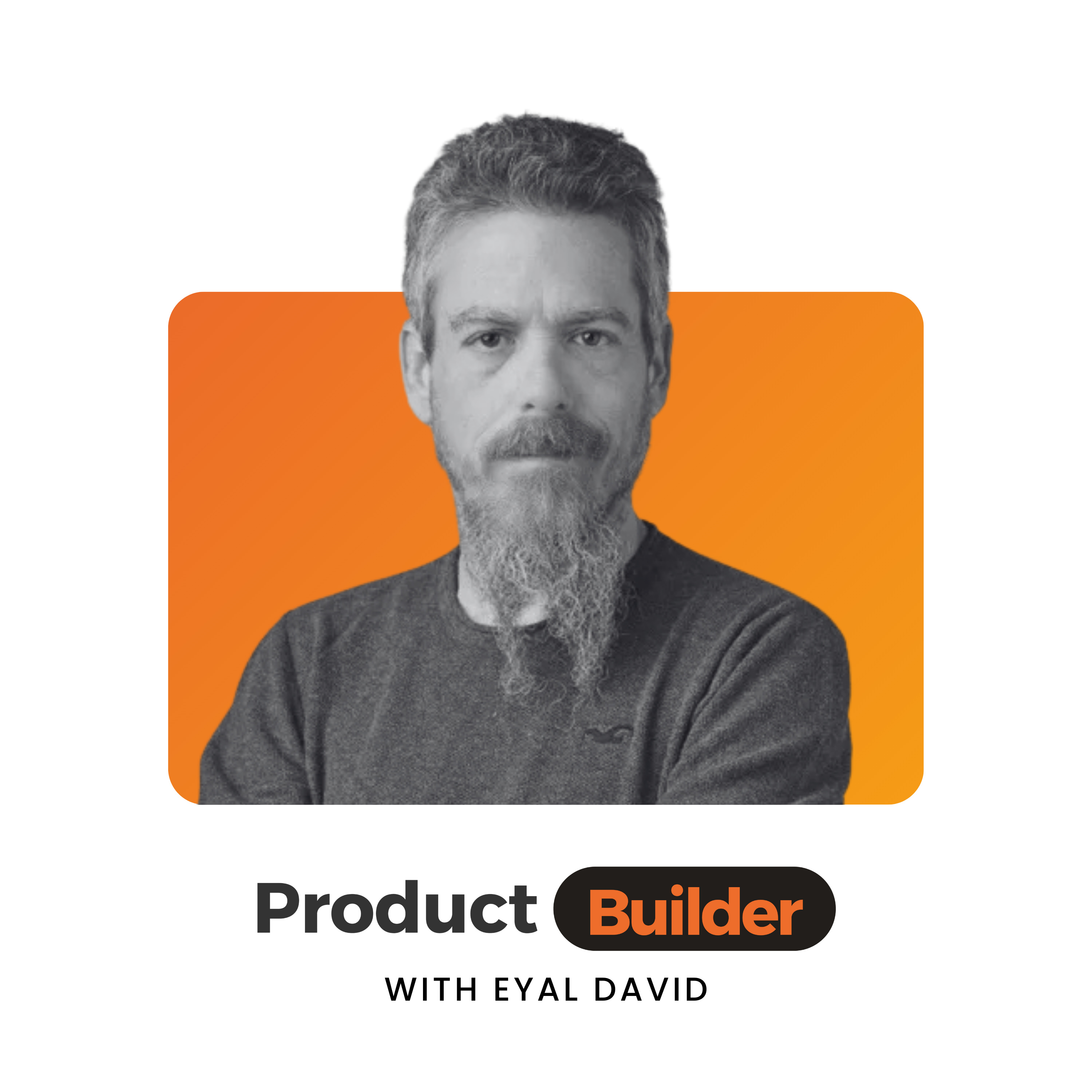
Nadav Abrahami | Dazl | Who Builds the Product Now: PM or Developer?
Host: Eyal David · Guest: Nadav Abrahami
In this episode
- AI writes code fast, but someone still has to understand what was built — the new challenge is understanding, ownership and engineering quality, not the writing itself.
- The boundary between Product and R&D is blurring: a PM who understands the technical complexity (where data is stored, how the system is built) gets a 'superpower'.
- The last 20% is the hard part: you reach 80% fast, then get stuck because you didn't understand what was built, or because the action just doesn't fit a prompt.
- Managing context for the LLM is the new, most important skill — building, saving and pointing the model at the right pieces of information (e.g. markdown files).
- Speed isn't the goal: move fast in ideation, not with eight features into production; gatekeepers, review and tests become more important, not less.
Listen to this episode
Episode Description
Nadav Abrahami, a Wix co-founder and founder of Dazl, on the change AI and vibe coding bring to product building. At the heart of the episode: if code is written fast, sometimes by people who can't read it — who understands the system, keeps up the engineering quality, and steers the product forward? The conversation moves from Dazl's vision, through the blurring boundary between Product and R&D, to new work practices: managing context for LLMs, gatekeepers, testing, fast prototyping, and what juniors should do.
Chapters
- 00:00 · Intro and meeting Nadav
- 00:52 · Founding a company in the Wix era vs. the AI era
- 01:48 · What Dazl builds and why vibe coding creates an understanding problem
- 03:54 · Understanding technical complexity without reading all the code
- 05:55 · Importing code, stacks, and the last 80/20 in AI tools
- 08:39 · Who Dazl is for and what happens to Product and R&D roles
- 11:20 · How Dazl uses Dazl inside the team
- 13:56 · Customer requests, long tail and pluggability in the AI era
- 16:52 · The most important skills for builders today
- 19:29 · Speed, experiments and product bloat
- 21:15 · The new skill: managing context for the LLM
- 24:51 · Managing a team when everyone can build
- 26:40 · Roadmap, milestones and what really changed in the process
- 28:04 · Code control, tests and gatekeepers
- 31:40 · Onboarding, architecture and the complexity of large systems
- 36:10 · Juniors in a world of vibe coding
- 39:13 · What to look for today in builders, PMs and developers
- 43:47 · Who Dazl is a fit for and where to start
Full transcript with speakers and timestamps
Selected quotes
“If the code is written so fast, sometimes by people who can't read it — then who will read it, who will understand it, who will care about its engineering quality?”
“You can move fast — the question is where.”
“The first thing I'd recommend to anyone who wants to be a developer is simply: build things.”
Questions & answers
What does Dazl do and who is it for?
Dazl is a tool for building, editing and inspecting apps built with AI. It provides debugging and understanding tools (seeing the generated HTML/CSS and linking it back to the code) so people understand what they built, without writing or reading all the code. It's for those who want to hold the technical complexity of their project and refine it over time — not just for a 'prompt or two'.
How do AI and vibe coding change the boundary between Product and R&D?
Nadav argues the separation becomes 'almost artificial': a PM who understands the architecture gets a superpower, and developers become more like builders. Gatekeepers remain for the complex systems, but more people in the org can add a feature. At Dazl they even took one of their most technical people and made him a Product Officer.
What is the last 20% that AI tools struggle to close?
People reach 80% fast, then get stuck on the last 20% — partly because they didn't understand what was built (e.g. where state is stored, inside a visual component or outside it), and partly because some actions simply don't make sense to do via a prompt. Architectural decisions that aren't exposed in the prompt determine what will be easy or expensive to change later.
Why is managing context for the LLM such an important skill?
According to Nadav, the hardest problem when working with LLMs is context — how much information to expose, where, and at what cost (tokens and accuracy). Whoever knows how to build and preserve the right pieces of context (e.g. saving decisions in markdown files and referencing them) gets the strongest power in vibe coding.
What should juniors do today to enter the world of builders?
Just build things — juniors today have a much more fun and fast way to learn: the tools both do part of the work and explain why they chose what they chose. Nadav says he wouldn't hire a junior with a résumé of a vibe-coded project built in a day; he looks for real motivation and projects built over time, like Barak, who built a synthesizer app over a year.
People & resources mentioned
People
- Nadav Abrahami — Wix co-founder, founder & CEO of Dazl
- Avishai (Nadav's brother, Wix co-founder)
- Gig (Wix co-founder)
- Barak (developer turned Product Officer at Dazl)
- Alexey (team manager in Lviv)
Companies & orgs
- Dazl
- Wix
Tools
- AI
- LLM
- Cursor
- VS Code (agent mode)
- MCP
- App Market
- A/B test
Related Episodes
Tony Arad Felik | Not Just Surviving AI — How to Thrive in It
01:06:04 · July 28, 2026
Tony Arad Felik, a mentor to managers in high-tech and a former R&D Director, on management in an era when roles, hierarchies and expectations are shi...

Aviad Harel | Team8 | How to Build a Thesis About the Future Worth Millions
00:54:32 · June 22, 2026
Aviad Harel, Managing Partner at Team8 and previously a co-founder of Sisense, on how to build startup theses at the earliest stages — before product,...

אורי כץ | Hailo | איך מנהלים מוצר חומרה מבוסס AI?
00:40:49 · March 5, 2026
אורי כץ הוא איש חומרה ותיק ומנהל מוצר ב-Hailo — חברה ישראלית שמפתחת צ'יפים של AI ל-Edge Computing. אורי הגיע ל-Hailo לפני שמונה שנים כשהחברה מנתה 15 א...

Amit Slutzky | Trullion | “I Left Figma and Went Into the Field — It Changed Everything”
00:41:22 · February 24, 2026
Amit Slutzky, Director of Product at Trullion, on one of the most important muscles for product people: understanding what's really going on with the...