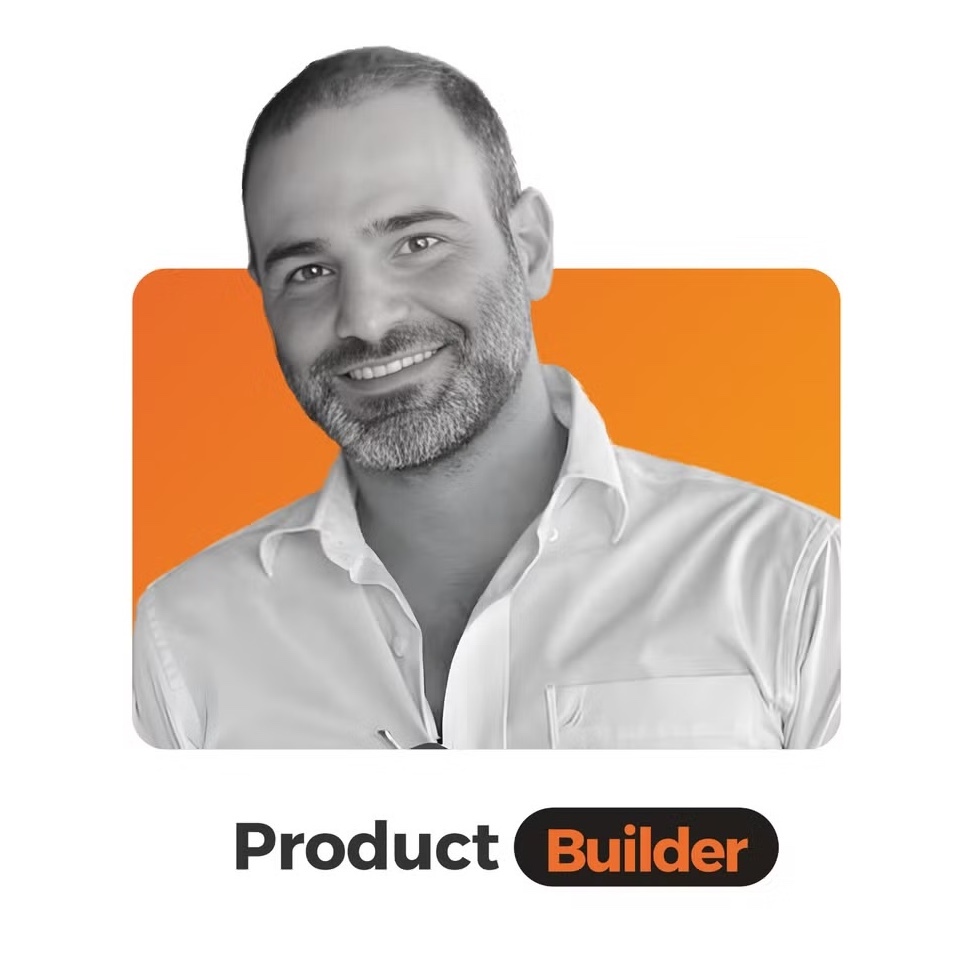
From Idea to Vision: Avner Roash on Building Startups, Positive ROI from Day 1, and Hype Index
Host: Eyal David · Guest: Avner Roash · About the host
To go from idea to business, Avner Roash advises never falling in love with the idea and knowing to let go if the market doesn't show demand fast — your time is worth money. Break the big vision into small tasks, aim for positive ROI from day 1, and only charge once you deliver more value than the customer pays.
In this episode
- Break the big vision down into the next small task — don't fear the big thing, but move forward step by step, from task to task.
- Don't fall in love with the idea: if the market doesn't show clear demand within a short time, know how to let go — your time is worth a lot of money.
- Aim for positive ROI from day 1, and only start charging money once you're delivering more value than the customer pays.
- Choosing a co-founder is like a marriage: personal chemistry, a shared dream, and professional complementarity — and always with a founders' agreement and vesting defined in advance, even if you haven't started yet.
- After a partner comes in on a 50-50 split, both sides are completely equal — even if you brought the idea; any sense of superiority will destroy the partnership.
- Start lean: a Lean Canvas, a four-to-five-slide deck, and a minimal MVP (even a Facebook/WhatsApp group or a landing page) to validate cheaply.
Listen to this episode
Episode Description
Avner Roash is an entrepreneur, investor, and founder of Hype Index, a system that scans the internet and identifies trends in the capital market and crypto, making the data accessible to the private investor. In the episode, Avner lays out his method for going from an idea to a vision to a business — from Lean Canvas and MVP, through validation, fundraising, choosing a co-founder and a founders' agreement, all the way to pricing and bringing in customers. Along the way he demonstrates his rules on three startups (iBreak, Rentam, WinChargeback, and Hype Index) and talks about the importance of positive ROI from the start, not falling in love with the idea, and the power of vision.

Full transcript with speakers and timestamps
Selected quotes
“First of all, you must not fall in love with the idea”
“I truly believe you can only start charging money when you give more value than that money is worth”
“The goal of Hype Index is to create a Hype Index for everything”
Questions & answers
What is Hype Index?
A system built starting in 2022 that scans the internet — social networks, news sites, and SEC filings — to identify trending in the capital market, mainly stocks and crypto, and make the data accessible to the private retail investor through a subscription — a tool that until now existed only as expensive enterprise solutions.
What are the stages in going from an idea to a business, according to Avner?
You start from an idea (usually from a personal need), throw everything onto a Lean Canvas, build an MVP for validation and proof of concept, thoroughly check that the market is big enough and that it's not just a feature, raise money if needed, choose a co-founder with a founders' agreement, and from there build and scale while measuring value and ROI.
When do you start charging money for the product?
At first you give early adopters free use. You only start charging once you feel the system delivers more value than the customer would pay — Avner defined in advance the number of features and scrapers (for example, scanning ~30 sites, over a thousand symbols) beyond which you can charge.
Why are a founders' agreement and vesting important?
To protect both sides and define in advance how you part ways. Avner lost a startup (Rentam) when a partner left and took the code after months of work, without an agreement. Vesting is split into milestones (for example, a full year = 15%, a raise or the first 100 customers = another 15%), so entitlement to the percentages advances along with the vision.
How did Hype Index bring in customers with no marketing budget?
Organically: posting on hubs like Product Hunt and AppSumo, and having a presence in existing communities of retail traders on WhatsApp, Telegram, and Discord. This way they reached over 500 customers (about half of them paying) within about four months and at zero shekels invested, and YouTubers even started creating content about them on their own.
Related Episodes
No More Moats: How Harmony Reached 50 Customers Without a Single Salesperson | Ran Ribenzaft (Harmony)
01:00:56 · September 24, 2026
Ran Ribenzaft, Co-Founder and CTO of Harmony (and formerly founder and CTO of Epsagon, sold to Cisco for $500M), is an unusual CTO: 90% of his time go...
Peter Paltchik: Wants to Be Israel's Most Influential Athlete
00:54:27 · September 6, 2026
Peter Paltchik — two-time Olympic judo medalist, entrepreneur, speaker and investor — on what really sustains people who build over the long haul: the...
Aviad Harel | Team8 | How to Build a Thesis About the Future Worth Millions
00:54:32 · June 22, 2026
Aviad Harel, Managing Partner at Team8 and previously a co-founder of Sisense, on how to build startup theses at the earliest stages — before product,...
"Stop Thinking Like an Employee. You're a Startup." | Lior Frenkel (Adaptation)
01:08:36 · May 17, 2026
Lior Frenkel, founder of Adaptation and author of "The Little Book for the New Manager," argues you should look at your career as a startup — with fea...