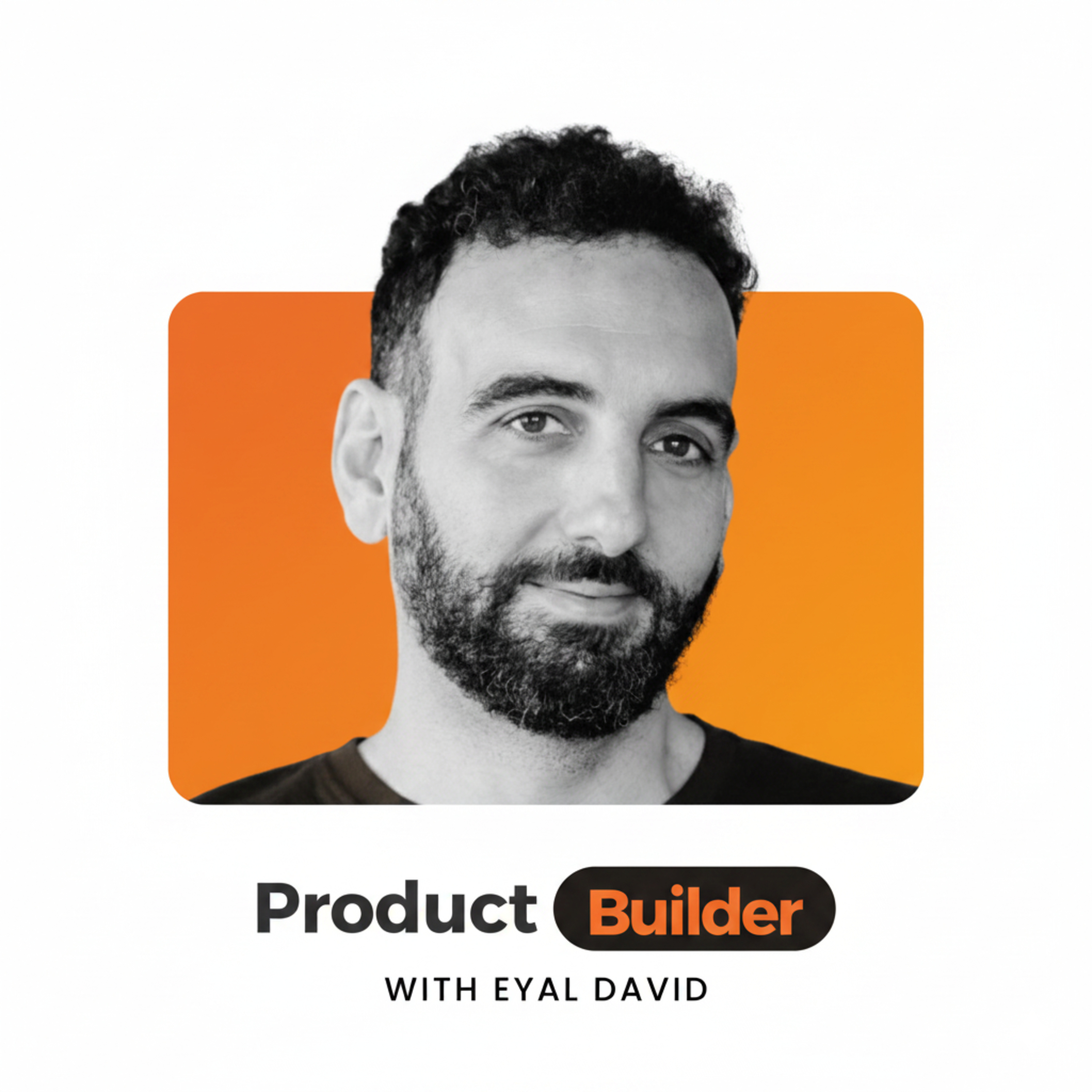
"Fast Is Slow, and Slow Is Fast": Building Right in the AI Era | Amir Frankel (Zero Networks)
Host: Eyal David · Guest: Amir Frankel · About the host
Amir Frankel, co-founder and CTO of cybersecurity company Zero Networks, argues that AI is no substitute for ownership: speed on the first step only counts if you measure the whole cycle, including quality, bugs and reviewer time. Zero ran a Cursor vs. Claude Code experiment, checked quality after two months, and landed on the principle "fast is slow, and slow is fast." The same logic drives the product: fix the root cause and contain the damage instead of chasing every alert.
In this episode
- Fast is slow, and slow is fast: AI speeds up the first step, but if you don't measure the whole cycle (quality, QA bugs, reviewer load) you pay for the shortcut for years.
- AI is not a substitute for ownership: Zero still requires two reviewers and expects every developer to review their own code hard before pushing the pain onto others.
- Fix the root cause, not the symptoms: instead of chasing alerts and CVEs, close the network by default and assume you've already been breached.
- AI is producing the new legacy software: tools built fast by non-programmers will miss details, which makes containment more important than ever.
- Juniors in the AI era: in their first month at Zero they may only read with AI, not write. That way they learn why things work before they guide the model.
- Human in the loop on the final action: AI can debug, find a fix and propose a PR, but a human does the merge to production.
Listen to this episode
Episode Description
Amir Frankel is co-founder and CTO of Zero Networks, a defensive cybersecurity company building micro-segmentation: closing the corporate network by default and dividing it down to the single computer, so that even an attacker who is already inside can't move. In conversation with Eyal David he explains the three ways AI occupies him: adoption inside the organization, the new power attackers have gained, and the need for containment as non-deterministic systems enter the organization. He describes the Cursor vs. Claude Code experiment and measuring quality after two months, two reviewers and PRs made of many small commits, Extreme Ownership, how to spot passion when hiring, and juniors who only read with AI in their first month. He then lays out Zero's proactive approach (assume breach, network-level MFA, a 14-minute install) and why AI is producing today's new legacy software.

Chapters
- 0:00 · Opening: what occupies Amir most — AI in three directions
- 0:56 · What containment and micro-segmentation are — the building analogy
- 4:59 · How AI entered Zero: from chatbots to Cursor and Claude Code
- 10:00 · The manager's side: more time, more depth
- 11:34 · The experiment: Cursor vs. Claude Code, and measuring quality after two months
- 16:01 · Extreme Ownership and Zero's unique PR structure
- 19:15 · Hiring: how to spot passion and the "why"
- 20:10 · What Zero is — fixing the balance of power between attacker and defender
- 27:32 · Near-zero churn and the third advantage: network-level MFA
- 31:57 · Stop chasing vulnerabilities — fix the system (root cause)
- 33:38 · The future: AI is producing the new legacy software
- 39:50 · The business: customer types and the cost of an attack
- 45:13 · Advice for juniors: get hands-on, understand why, bring passion
- 46:54 · Product in the new world — and the human in the loop
Full transcript with speakers and timestamps
Selected quotes
“AI is an amazing thing, but it's not a substitute for ownership, it's not a substitute for your responsibility for what you put in.”
“It's not enough to pass the ball, you need to make sure someone caught it.”
“It's really easy to start a POC, really easy to start a story. The hard part is connecting the whole story and in the end coming out with one thing.”
Questions & answers
Who is Amir Frankel?
Amir Frankel is co-founder and CTO of Zero Networks, a defensive cybersecurity company specializing in micro-segmentation and in connecting the network world with the identity world.
What is micro-segmentation and what does Zero Networks do?
Micro-segmentation divides the corporate network into small units, down to the single computer, so only what needs to talk can talk. Amir compares it to a building where every apartment is locked: even if someone gets into the lobby, they don't reach the jewelry. Zero learns the network automatically, installs in 14 minutes with an agentless approach, and adds MFA at the network level.
What did Zero learn from its Cursor vs. Claude Code experiment?
One group worked with Cursor and another with Claude Code, and after two months they compared. In some cases tasks shipped very fast but not at Production-Grade, and sometimes too much code was created. The conclusion: measure the whole cycle, including bugs opened by QA, not just the speed of the first step.
How has AI changed the balance of power in cybersecurity?
According to Amir, an attacker has a well-defined objective and only needs to succeed once, so AI gave attackers enormous power: an attack that once took months can now achieve full lateral movement in under half a minute. Defenders must succeed 100% of the time, which is why Zero's approach is proactive defense and containment.
What is Amir Frankel's advice for juniors?
Get hands-on, understand why something works rather than just making it work, bring passion, and do only what you love. If you don't love programming, find another role in tech; in his view the PM world is going to grow significantly thanks to AI.
People & resources mentioned
Related Episodes
"Stop Thinking Like an Employee. You're a Startup." | Lior Frenkel (Adaptation)
01:08:36 · May 17, 2026
Lior Frenkel, founder of Adaptation and author of "The Little Book for the New Manager," argues you should look at your career as a startup — with fea...
Tom Mayblum | MIND | When Is a Customer Conversation Worth More Than Data?
00:33:39 · February 9, 2026
Tom Mayblum, VP Product at MIND, shares how he built a product organization from scratch at a cyber startup coming out of stealth, and why the challen...

Neta Coral | Apiiro | 0 to 1, Not Just in Cyber: How to Build New Product Initiatives Inside a Company
00:46:31 · November 29, 2025
Neta Coral, a product manager on Apiiro's solutions team, talks about building new 0-to-1 product initiatives inside an existing organization, deliber...

Ela Hatzav | Wix | An unconventional career move into AI PM. The product world is changing
00:34:40 · November 16, 2025
In this episode, Ela Hatzav shares an unconventional career that started in psychology, ran through tourism, Taglit and business strategy, and led her...