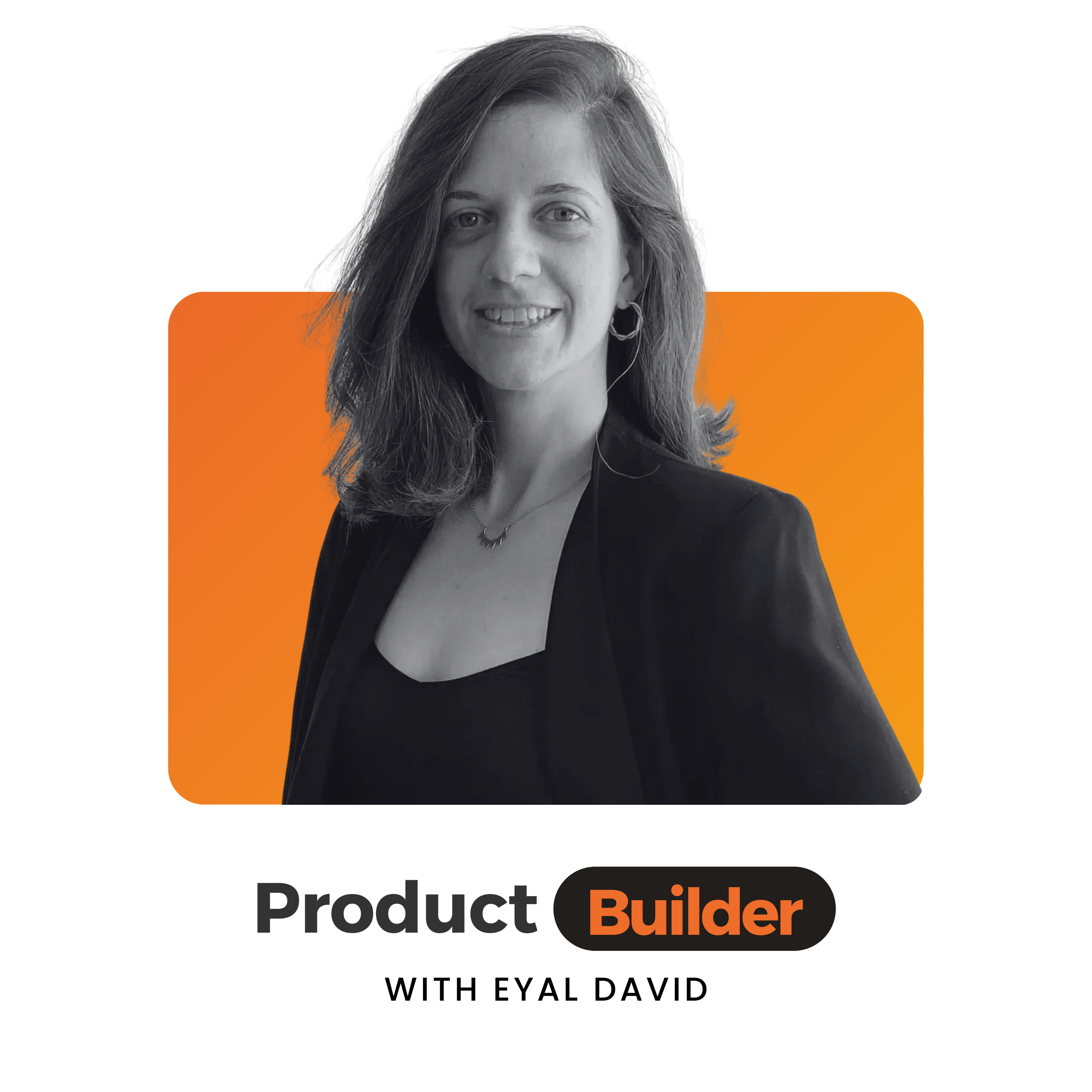
Neta Coral | Apiiro | 0 to 1, Not Just in Cyber: How to Build New Product Initiatives Inside a Company
Host: Eyal David · Guest: Neta Coral · About the host
To take a new product initiative from 0 to 1 inside an existing company, start with why you are expanding: an existing customer, a new audience, or an RFP requirement, and only then define how broad the solution must be. Neta Coral, a product manager at Apiiro with 12 years in cybersecurity, lays out a repeatable process: domain and competitor research, sketching the ideal solution, value-versus-cost analysis per feature, building a moat from the product's existing strengths, validation with design partners, and a staged rollout.
Read the episode feature on Geektime →
In this episode
- Before building something new, define why you're expanding: serving an existing customer, reaching a new audience, or getting a foot in the door to qualify for an RFP. The reason determines whether you need a full solution that replaces a system or a point solution.
- You don't copy a moat from competitors. Copy-pasting their feature set keeps you one step behind forever. Find the strength your product already has and extend it into the new world, the way Apiiro used Deep Code Analysis to match code to what actually runs in the cloud.
- Analyze every feature by value versus cost. On an existing platform some features come almost free (RBAC, reports, policies), and the critical question is whether the new capability can be built in isolation or requires a cross-cutting change to the system.
- Customers you lost are a great research source: they ran POCs with your competitors too and can tell you what they have that you don't. Customers who asked for the capability are natural design partners.
- Showing customers design documents before the product exists can close a deal: it proves you understand their pain and builds trust and feedback that shape the solution.
- Check early that customers can actually adopt the solution: no dependency on a single vendor (AWS only), and no access or permission requirements they can't grant.
Listen to this episode
Episode Description
Neta Coral, a product manager on Apiiro's solutions team, talks about building new 0-to-1 product initiatives inside an existing organization, deliberately not only in cyber. She explains what Apiiro does (ASPM: mapping the code, prioritizing alerts, and automated remediation), then walks through the steps: identify why you're expanding, research the domain, the personas and the competitors, sketch an ideal solution, analyze each feature by value and cost on top of an existing platform, and build a competitive advantage from strengths the product already has. She shares how design documents she showed to large customers closed deals and turned them into design partners, what a staged rollout looks like, why marketing and sales must be involved from day one, and which pitfalls to catch early: a solution tied to a single vendor, or access requirements the customer can't grant. She closes with the skills she considers most important for product managers and her own path from QA at GE Healthcare to product management in cyber.

Chapters
- 0:04 · Intro
- 0:27 · How Neta got into product management
- 3:11 · What Apiiro does, who it serves, and the alert-inflation problem
- 8:53 · The SDLC is changing: AI and Copilot
- 12:30 · Approaching 0→1: why expand and what's the goal
- 15:28 · Market, domain and competitor research done right
- 19:17 · Identifying a real moat and competitive advantage
- 26:35 · The 0→1 traps to avoid
- 28:51 · Design partners and first runs with customers
- 34:02 · Iterating with marketing and sales from day one
- 38:04 · The most important skills for product managers
- 43:21 · Getting into product management in cyber (including women in the field)
- 45:41 · Wrap-up
Full transcript with speakers and timestamps
Selected quotes
“If I come and copy-paste my competitors' feature set, then I'll probably always be one step behind them.”
“AI doesn't operate in a context-free world. AI needs context so that we can do something real with it.”
“Most importantly, always keep in mind the goal of why I'm doing this, so I'm constantly aligning to it and not developing monsters that aren't relevant.”
Questions & answers
What does Apiiro do?
Apiiro is an ASPM (Application Security Posture Management) platform for enterprises. It maps all the code and technologies in the organization using Deep Code Analysis, prioritizes alerts from the various security tools, and helps remediate them automatically, for example by opening a ticket for the developer or commenting on a PR.
Who is Neta Coral?
A product manager on Apiiro's solutions team with 12 years of cybersecurity experience, including roles at CyberArk and at a startup CyberArk acquired. She started in QA as a student at GE Healthcare, and holds a degree in industrial engineering and management and an MBA.
How do you start a 0-to-1 product initiative in an existing company?
First understand why you're expanding and how broad the solution needs to be. Then research the domain, personas and competitors, talk to existing customers and to customers you lost, sketch an ideal solution, and analyze each feature by value versus cost to assemble an MVP. Finally, validate with potential customers and design partners.
How does a staged rollout of a new feature work?
First release an initial version to design partners who want to give feedback and adjust based on it. Then expand to early adopters willing to get features before GA, and only once it works at scale move to GA, with blogs, announcements and sometimes a launch around a major conference.
When should marketing and sales get involved in a new initiative?
From the start. Marketing knows the market and the buzzwords and helps make sure the product and the marketing speak the same language, down to the name of the new vertical. Salespeople have to sell it, so they work hand in hand with the product manager from the first stage.
People & resources mentioned
People
Companies & orgs
Related Episodes
"Fast Is Slow, and Slow Is Fast": Building Right in the AI Era | Amir Frankel (Zero Networks)
00:54:39 · June 7, 2026
Amir Frankel is co-founder and CTO of Zero Networks, a defensive cybersecurity company building micro-segmentation: closing the corporate network by d...
Tom Mayblum | MIND | When Is a Customer Conversation Worth More Than Data?
00:33:39 · February 9, 2026
Tom Mayblum, VP Product at MIND, shares how he built a product organization from scratch at a cyber startup coming out of stealth, and why the challen...

Neta Coral | Takhles Episode: Start With the Business Reason, Only Then the Solution
00:04:03 · December 3, 2025
A Takhles episode with Neta Coral of Apiiro: before jumping to a solution in a new initiative, identify why you're entering it at all. Neta describes...

Hasan Abasi | Haat | How Do You Launch a Product in a Market That Isn't Ready?
00:58:20 · September 25, 2025
Hasan Abasi, founder and CEO of Haat Delivery, moved back from Zurich to Umm al-Fahm and found a city of 70,000 residents and over 200 restaurants wit...