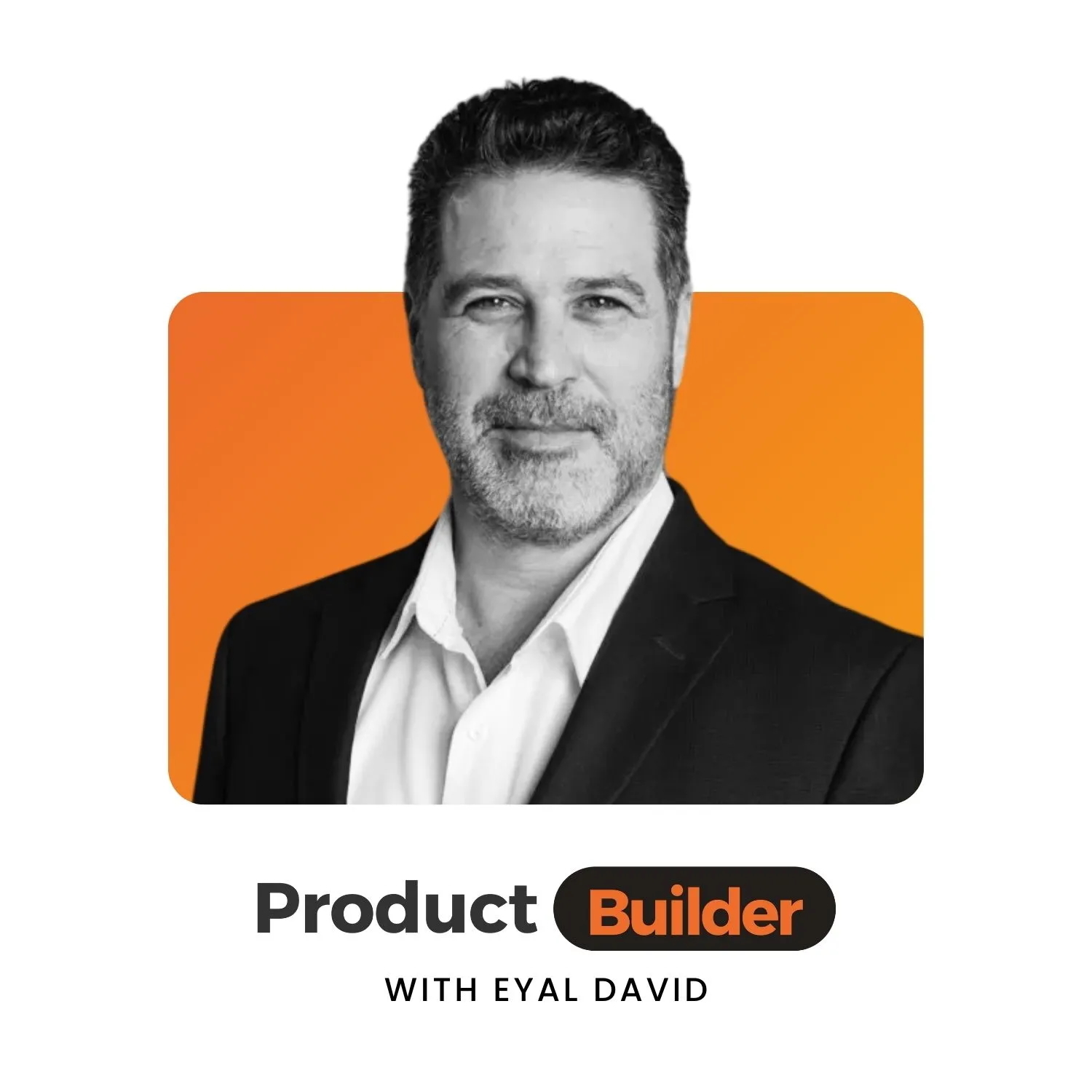
Deep Health Tech: Why 'Dreams' No Longer Get Funded — and How to Build a Healthcare Startup Investors Want
Host: Eyal David · Guest: Talor Zaks · About the host
In this episode
- The American healthcare system pays 4–5 times what the Israeli healthcare system pays for every procedure and gets worse results — this gap generates most of the global opportunities in healthcare.
- In healthcare the consumer almost never pays directly: there's always a 'triangle' of who uses, who decides and who pays — and understanding the money flow and the reimbursement code is critical.
- The era of investing in dreams is over — investors want a working business with revenue (usually a threshold of about 2 million dollars) and a fast ROI, not promises.
- The industry suffers from a severe shortage of product management capabilities; a proven business model and a distilled value proposition are product work par excellence.
- The population is aging and there aren't enough medical staff — technology, and especially AI and early detection of flare-ups, is the opportunity to make the system efficient and accessible.
- To overcome foreign investors' retreat from Israel, the fund packages startups with an early 'flip' — enabling investment in Israelis and not necessarily in Israel.
Listen to this episode
Episode Description
Talor Zaksh, a managing partner at the eHealth Ventures investment fund, takes us into the world of Deep Health Tech — investing in clinical medical technology. Drawing on more than 20 years of experience in Israel, the US and Europe, he explains why the American healthcare system is 'broken' and expensive, how money flows between the patient, the doctor, the insurance company and the pharmaceutical company, and why the era of investing in 'dreams' is over — investors want a working business. At the center of the conversation: the critical importance of methodical product management in an industry that thinks in a non-intuitive way.

Full transcript with speakers and timestamps
Selected quotes
“There's no more investing in dreams. It's over. Don't come to me with a dream. Come with a business.”
“My answer is, I wish AI would save us.”
“We need to know that we don't know, and to ask questions that are sometimes a bit stupid, because this system thinks in a non-intuitive way.”
Questions & answers
What is Deep Health Tech and what does the fund invest in?
Health Tech is investing in medical technology that is not drugs and not wet biology. Deep Health Tech touches things that are more clinical and technologically deeper. The fund invests in Early Stage, and today focuses on the Early Commercial stage.
Why is the American healthcare system considered 'broken'?
It pays 4–5 times what the Israeli healthcare system pays for every procedure, but the results are worse. It lacks accountability — a doctor wants the best for the patient regardless of cost — and economic incentives push toward long visits and charging extra.
Why is it so hard to raise money in the field right now?
After the 2021 investment bubble (following Corona) came a bitter disappointment and companies wrote off billions. Investors have withdrawn, mainly supporting their existing portfolios, and most American funds won't get in the room before revenue of about 2 million dollars.
What's the difference between a clinical path (FDA/reimbursement) and a SaaS path?
A clinical path is complicated and requires FDA approval and reimbursement — but it's harder to compete with you. A SaaS company (like Agmon) doesn't need regulation and reimbursement and resembles a regular software company, but its competitive advantage erodes faster.
When is it right to bring a product manager into a startup in the field?
At an early stage the product manager is usually the CEO — the content expert who knows the clients, but who operates intuitively and without methodology. The fund encourages systematic thinking, and the moment the financial option opens up — to bring in a dedicated product manager as fast as possible.
Related Episodes
How to Build AI at the Edge of the Device — Ori Katz, Hailo
00:40:49 · March 5, 2026
Ori Katz, who leads the AI SoC domain at Hailo, tells the story of how an Israeli chip company became a serious player in AI at the edge — smart camer...
Tom Mayblum | MIND | When Is a Customer Conversation Worth More Than Data?
00:33:39 · February 9, 2026
Tom Mayblum, VP Product at MIND, in a short tachles episode on when a direct customer conversation is worth more than looking at the data — and when y...
Navot Volk | GroundUp VC | What’s Really Worth Building in 2026? Inside an Investor’s Mind
00:41:40 · January 18, 2026
Navot Volk, a partner at the GroundUp venture fund, on pre-seed and seed investing in an era when nearly every startup pitches itself as AI. The conve...
Keren Wexler | Optimove | Product-Team Processes That Create Big Impact
00:44:13 · December 23, 2025
Keren Wexler, Senior Director of Product at Optimove, on product, teams and decision-making — and the point where process stops being bureaucracy and...