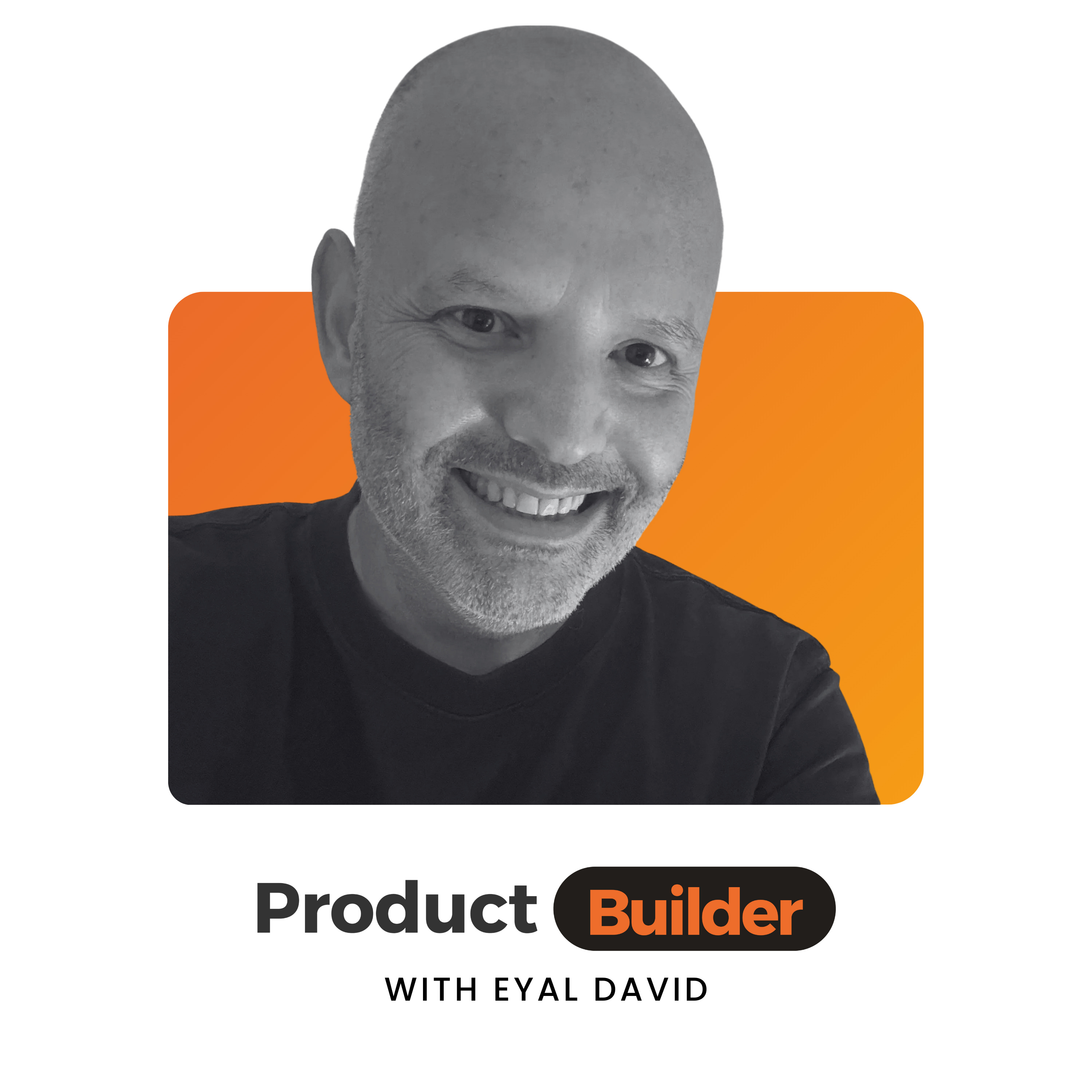
Rani Bar Hama | Similarweb | Building Digital and Physical Products: What's Similar and What's Different?
Host: Eyal David · Guest: Rani Bar Hama · About the host
Rani Bar Hama, Senior Director of Product at Similarweb, builds both digital products with AI and furniture and functional art from discarded objects. In his view, you can't build with AI the way you work in a workshop: "one big prompt" quickly turns into spaghetti, and what works is writing a PRD, converting it into an ordered prompt strategy with acceptance criteria and tests for each step, and freezing parts that already work. Building is easy today; the real difficulty is choosing what to build.
In this episode
- When building with AI, planning beats intuition: one big prompt plus spot fixes leads to spaghetti. Write a PRD, convert it into a set of prompts in a logical order, and define for each prompt what you expect to get and its acceptance criteria.
- To prevent regressions, ask the AI for the list of tests that prove each feature works alongside the feature itself, and freeze parts that already work (for example in Base44) before moving on.
- A physical product is one unit for one user you know; a digital product forces you to think in scale, plan the ten features beyond the MVP in advance and play with them like Lego.
- You see a physical product's success in the smile of whoever receives it; in digital the launch is only the start, and you need events, dashboards and a mindset of ongoing tracking of what you shipped.
- The three skills Rani looks for in product managers: representing the user, being the glue between business and engineering even without authority, and curiosity that lets you lift your head from routine and know what to focus on.
- Building is easy today, so deciding what to build is the key muscle. An AI side project simulates the whole product manager job (research, PRD, prioritization, building) and gives you an asset to show in interviews.
Listen to this episode
Episode Description
Rani Bar Hama, Senior Director of Product at Similarweb, has spent 20 years in product and UX across domains: Amdocs, Orange in the value-added services era, gaming at NeoGames and British companies in Gibraltar, insurtech and AI. In this episode he compares two kinds of building: physical work by hand, functional art from junk under the 109inside brand, and digital building with AI. He explains why one big prompt ends in spaghetti and how a PRD-then-prompt-strategy approach reduces regressions, and shares the system he built for his wife, a reading teacher, that lets students practice reading in front of the computer, measure their pace and earn coins. From there the conversation moves to the differences between physical and digital products: planning versus intuition, a single unit versus scale, QA, measuring success, and why an AI side project is a good way into product.

Chapters
- 0:00 · Intro
- 0:31 · What Similarweb does and what Rani leads there
- 1:04 · Rani's path: from Amdocs to product (and how he started as a builder)
- 2:32 · Orange as a "playground" and value-added services
- 3:57 · Entering gaming: learning a new domain with no experience
- 6:02 · Relocation and British gaming: end-to-end player experience
- 7:22 · Insurtech and AI: new domains and what you take from them
- 9:17 · The three most important product skills: user, glue, curiosity and focus
- 11:09 · How Rani builds with AI and what it changed for him
- 12:13 · Why Base44 and how to avoid prompt spaghetti
- 12:51 · Tips for working with Base44
- 13:23 · Examples of small side projects he built
- 14:00 · The system he built for his wife: scaling reading practice, dashboard and gamification
- 17:01 · Physical building: functional art from "junk" and 109inside
- 19:57 · Physical vs. digital vs. AI products: planning, scale and versions
- 23:39 · Does planning hurt creativity or strengthen it?
- 30:53 · Personal tool stack: chat, Docs, Claude and screen layouts
- 33:17 · Testing, regressions and freezing parts that work
- 34:36 · Measuring success: a user's smile vs. tracking and events in digital
- 39:16 · Building is easy today. The hard part is choosing what to build
- 42:40 · How to start building a side project to get into product
- 44:37 · Wrap-up
Full transcript with speakers and timestamps
Selected quotes
“I wrote one big, magnificent prompt and hoped for the best... very quickly I got to spaghetti.”
“Today you don't need anything, you need 50 dollars a month for your credits, and honestly you need to have some kind of love or passion for the thing.”
“Many times when you're inside the planning your creative process can be even stronger.”
Questions & answers
What is a prompt strategy?
A method Rani uses when building with AI: first write a PRD of what you want to build, then convert it into a set of prompts in a logical order that doesn't break itself. For each prompt you define what you asked for, what you should get and the acceptance criteria, plus which tests will prove the feature works.
What did Rani build for his wife with AI?
His wife, Dalit, is a Hebrew teacher who teaches reading and was limited by time. Rani built her a system that manages her private lessons (scheduling and payments) and, at its core, lets her record herself reading while the student practices reading in front of the screen. The system measures how much they read and how fast, shows a progress dashboard and awards a coin after each lesson. It took about three months of weekends and nights.
What's the difference between building a physical product and a digital one?
In physical work Rani goes by intuition, builds one item for one user, and pivots when the material stops him. In digital you need planning, thinking about scale and versions, working with analysts, UX and engineering, and continuous measurement after launch. Changing something after it's built is also far easier in digital.
What is 109inside?
Rani Bar Hama's brand and site for functional art he creates from discarded or flea-market objects: light fixtures, tables and cabinets. One example is a desk he built from his grandfather's bicycle, with a glass top so the bicycle stays visible.
How do you get into product without experience?
According to Rani, build a side project with AI and vibe-coding tools. The process simulates the product manager's work: research, gathering needs, a PRD, prioritization and building. In the end you have an asset to show, which sometimes even makes money, and it breaks the ice in interviews.
People & resources mentioned
Companies & orgs
- Similarweb
- 109inside
- Amdocs
- Orange (Partner)
- NeoGames
- Ladbrokes Coral
- William Hill
- Mansion
- Hahoy
- Netspark
Tools
- Base44
- Lovable
- Claude
- ChatGPT
- Google Docs
Related Episodes
Galit Galperin | AI MINDSET | What Does It Really Take to Succeed with AI?
00:57:58 · February 17, 2026
Galit Galperin, founder of Hi Mindset, on adopting AI in organizations — not as another tool that adds "efficiency", but as a deep change in how we wo...
Nadav Abrahami | Dazl | Who Builds the Product Now: PM or Developer?
00:45:04 · January 7, 2026
Nadav Abrahami, a Wix co-founder and founder of Dazl, on the change AI and vibe coding bring to product building. At the heart of the episode: if code...
אם אף אחד לא מתלונן, זה לא אומר שהכול טוב | בנצי ארבל (עסק מבפנים)
01:04:10 · November 10, 2026
אומרים שמי שרוצה לעשות כסף שלא ייכנס למסעדנות. ובכל זאת, בנצי ארבל, יחד עם השותף שלו עומר, בנה שלוש מסעדות, ביניהן כפרה מיו וקלבריה, ומפעל פסטה שמזין...
בוטסטראפ: איך בונים עסק שמתקיים מהכנסות?
00:33:49 · November 2, 2026
רוצים לבנות עסק טכנולוגי שההכנסות שלו מחזיקות אותו, במקום לרוץ מסיבוב גיוס אחד לשני? שיחה ליזמים בתחילת הדרך ולבעלי עסקי שירותים ששוקלים להפוך שירות ל...