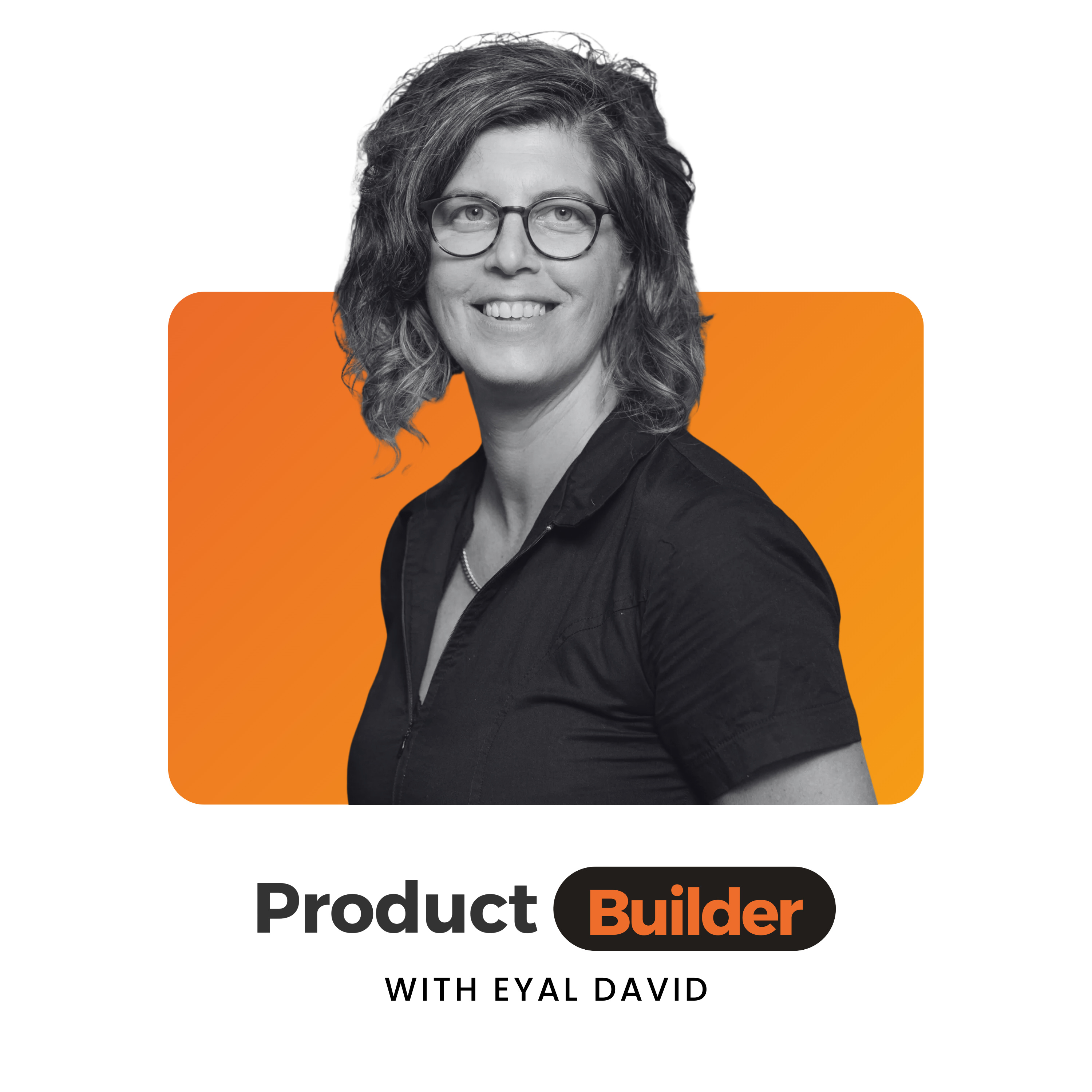
Galit Galperin | AI MINDSET | What Does It Really Take to Succeed with AI?
Host: Eyal David · Guest: Galit Galperin
In this episode
- AI doesn't start with tools, it starts with mindset: the question isn't "which tool", but whether you have the head to work differently.
- There's a big gap between "using AI" and working with it well; unmonitored use creates AI slop — more work for the team and cleanup after the machine.
- Critical thinking becomes a core skill: leading the process, validating and deciding — not just "hunting for where it lied".
- A real builder understands Tool, Prompt, Chaining and Outcome; a good prompt is a spec and judgment (like a photographer who understands aperture and light), not a "one prompt" slot machine.
- There's no more "grace period" for learning — you enter constant learning: short iterations, fast trial-and-failure, and you can no longer plan a year ahead like before.
Listen to this episode
Episode Description
Galit Galperin, founder of Hi Mindset, on adopting AI in organizations — not as another tool that adds "efficiency", but as a deep change in how we work, learn and manage. The episode moves from an AI-readiness index, through AI slop and critical thinking, to what product managers, developers and organizations need to learn to stay relevant. The central tension: everyone wants to "use AI", but only those who understand where the tools are good, where they're dangerous, and how to truly build with them move on to the next stage.
Chapters
- 00:18 · Meeting Galit and Hi Mindset
- 01:36 · How Galit came to product back in the mobile revolution
- 03:16 · An AI-readiness index: who to hire and who to train
- 07:06 · What to do tomorrow morning to start adopting AI
- 11:04 · Why you must make time to experiment
- 15:42 · Basic use vs. really understanding how an LLM works
- 16:36 · What AI slop is and why it's dangerous for teams
- 18:26 · Critical thinking as a skill for working with AI
- 21:44 · Why a good prompt is like a photographer's work
- 23:38 · What it really takes to be a builder in the AI era
- 31:30 · Building internal tools, no-code and mini tools
- 36:45 · Cursor, code, responsibility and what happens before production
- 43:27 · What AI Mindset is and why it matters
- 47:03 · How an organization starts adopting AI seriously
- 49:44 · Why you can no longer plan a year ahead like before
- 51:28 · How to learn well when the pace of change doesn't stop
- 55:32 · Where Galit sees opportunities to build products and businesses
Full transcript with speakers and timestamps
Selected quotes
“One of the skills AI demands is, necessarily, critical thinking.”
“When you're really a builder, you need to know exactly: which tool, which prompt, which chaining, and what the outcome is.”
“You're not entering a grace period — you're entering a period of great uncertainty where you can no longer plan a year ahead.”
Questions & answers
What is AI Mindset and why does it matter more than a list of tools?
According to Galit, AI Mindset is the point where your thinking shifts and every problem is examined through "maybe AI could help me with this?". It's not another tool or feature but a way of thinking — which is why she argues AI doesn't start with tools, but with whether a person, team or organization is truly ready to work differently.
What is AI slop and why is it dangerous for teams?
AI slop is an insufficiently-vetted AI output passed along as if it's finished. Galit explains it "costs you twice": someone else on the team has to fix both your work and what the machine did poorly, and it also signals you're still at a basic usage level. It happens mainly when the machine isn't given enough context.
Why is critical thinking a core skill when working with AI?
Not in the sense of hunting for lies, but of leading: I say what I think, guide, ask for sources, validate and decide — instead of letting the machine lead me. Especially in an unfamiliar domain, you need to interrogate the output until you reach confidence. It's the skill that separates basic use from real work.
What does it really take to be a "builder" in the AI era?
Understanding the chain: which Tool, which Prompt, which Chaining, and what the Outcome is — and crafting it, not relying on a "one prompt" slot machine that spits out a random result. Galit compares a prompt to a photographer's work: whoever wants a good result understands nuance, context and requirements, not just "a person sitting with headphones".
How does an organization (or a person) start adopting AI seriously?
The first thing is to make time for real experimentation (an hour a day, like a gym for the brain), and to look inward at perceptions and fears (trust & safety). At the organizational level: break it into modules, understand what's blocking — speed, people or culture — and shift into short iterations and constant learning instead of annual planning.
People & resources mentioned
People
- Galit Galperin — founder of Hi Mindset, AI-adoption advisor and Reichman faculty member
- Zapier CEO (AI-readiness index)
- Anthropic CEO (letter on a two-year window)
- Hiten Levitt
Companies & orgs
- Hi Mindset
- Orange
- Reichman University
- Reichman Tech School
- Zapier
- Anthropic
- OpenAI
- Duolingo
Tools
- GPT
- Gemini
- Claude
- Cursor
- NotebookLM
- ElevenLabs
- Notion
Related Episodes
Tony Arad Felik | Not Just Surviving AI — How to Thrive in It
01:06:04 · July 28, 2026
Tony Arad Felik, a mentor to managers in high-tech and a former R&D Director, on management in an era when roles, hierarchies and expectations are shi...

Aviad Harel | Team8 | How to Build a Thesis About the Future Worth Millions
00:54:32 · June 22, 2026
Aviad Harel, Managing Partner at Team8 and previously a co-founder of Sisense, on how to build startup theses at the earliest stages — before product,...

אורי כץ | Hailo | איך מנהלים מוצר חומרה מבוסס AI?
00:40:49 · March 5, 2026
אורי כץ הוא איש חומרה ותיק ומנהל מוצר ב-Hailo — חברה ישראלית שמפתחת צ'יפים של AI ל-Edge Computing. אורי הגיע ל-Hailo לפני שמונה שנים כשהחברה מנתה 15 א...

Amit Slutzky | Trullion | “I Left Figma and Went Into the Field — It Changed Everything”
00:41:22 · February 24, 2026
Amit Slutzky, Director of Product at Trullion, on one of the most important muscles for product people: understanding what's really going on with the...