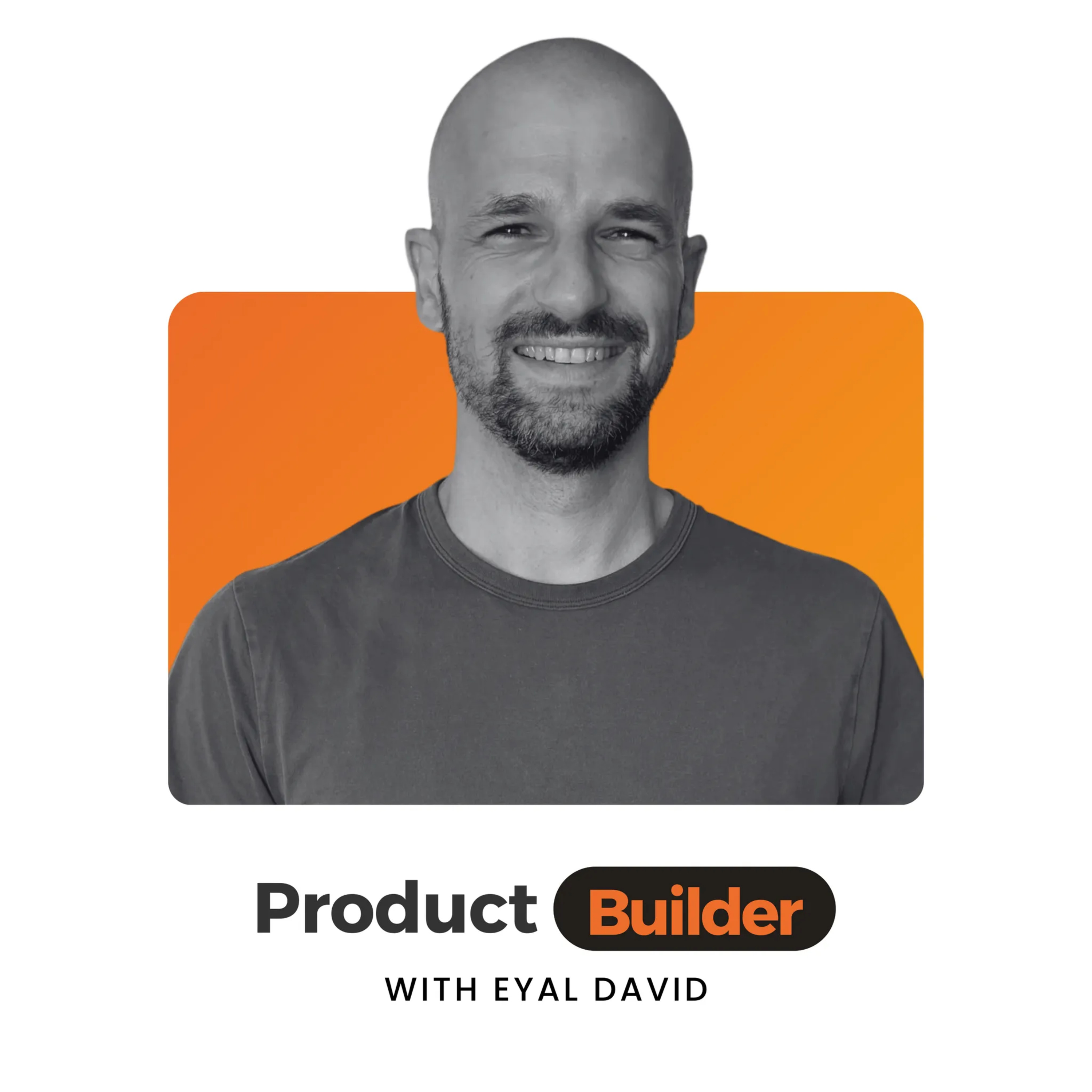
Dedy Kredo (Qodo): Developers as Orchestrators and the Future of Code in the AI Era
Host: Eyal David · Guest: Dedy Kredo
In this episode
- The developer's role is shifting from writing code to orchestrating and reviewing agents; strong developers who adopt these working methods become several X more productive.
- Vibe coding is magical for fast iteration but can produce an unmaintainable 'Frankenstein'; in the enterprise you need processes, best practices per team/organization, and ownership of AI-written code.
- Qodo's strategy is to stay vendor-agnostic: give developers freedom to choose the model/coding agent, but keep the context, verification, and review layer close to the organization.
- The key skill for product people today is adaptability — holding a strong point of view and being opinionated, but being able to fail fast and pivot fast in the face of change.
- The game has become win big or fail big: you need a strong insight, big bets, and to find the sweet spot of building a few months ahead (not too far, not obsolete in two months).
- The future is personalized — adapting and customizing the models' output to each organization's specific processes, especially in the enterprise.
Listen to this episode
Episode Description
Dedy Kredo, co-founder and CPO of Qodo (founded as Codium), talks about the present and future of software development in the AI era. Dedy explains the shift in which developers become orchestrators and reviewers of agents, why vibe coding alone doesn't hold up in the enterprise, and how Qodo identified as early as 2021 that the big challenge would be 'code integrity' — making sure code written by models works according to spec, meets best practices, and doesn't break anything, at scale.

Full transcript with speakers and timestamps
Selected quotes
“So basically the shift that developers are going to go through is becoming more orchestrators and reviewers of the agents' work.”
“What matters is catching the bug that will cause and lead to the next CrowdStrike.”
“I believe the future is personalized.”
Questions & answers
What is code integrity, the concept Qodo focuses on?
The ability to make sure that code written by LLMs works according to the requirements and the spec, does exactly what it needs to (without edge cases and without unnecessary additions), meets the organizational standards, doesn't break anything — and all of it at scale.
What are Qodo's main products?
Qodo Merge (code review, a leader in the field), Qodo Command (a CLI tool for code generation and for creating custom agents), and Qodo Aware (a context engine that indexes thousands of repos and documentation). There are also plugins for VS Code and JetBrains, and an open source base called PR Agent.
Why doesn't Qodo compete directly against the big LLM providers on code generation?
Because code generation is becoming commoditized and changes fast. Enterprise organizations prefer a vendor-neutral player that lets them switch between models easily when a new state of the art comes out, and lets them own the context, verification, and review layer.
What is Qodo's go-to-market strategy?
A 'middle out' model — a combination of bottom up (self-serve and PLG, teams that put in a credit card) and top down (selling to platform teams / developer experience teams that gain power in the organization and decide which agents get in).
How does Qodo measure success at customers?
Moving beyond a 'vibe benchmark' to tangible metrics: the percentage of code written by an agent (in generation), the impact on the review cycle and the number of problems caught (in code review), and the percentage of suggestions that get implemented.
Related Episodes
No More Moats: How Harmony Reached 50 Customers Without a Single Salesperson | Ran Ribenzaft (Harmony)
01:00:56 · September 24, 2026
Ran Ribenzaft, Co-Founder and CTO of Harmony (and formerly founder and CTO of Epsagon, sold to Cisco for $500M), is an unusual CTO: 90% of his time go...
Tony Arad Felik | Not Just Surviving AI — How to Thrive in It
01:06:04 · July 28, 2026
Tony Arad Felik, a mentor to managers in high-tech and a former R&D Director, on management in an era when roles, hierarchies and expectations are shi...
Aviad Harel | Team8 | How to Build a Thesis About the Future Worth Millions
00:54:32 · June 22, 2026
Aviad Harel, Managing Partner at Team8 and previously a co-founder of Sisense, on how to build startup theses at the earliest stages — before product,...
Amit Slutzky | Trullion | “I Left Figma and Went Into the Field — It Changed Everything”
00:41:22 · February 24, 2026
Amit Slutzky, Director of Product at Trullion, on one of the most important muscles for product people: understanding what's really going on with the...