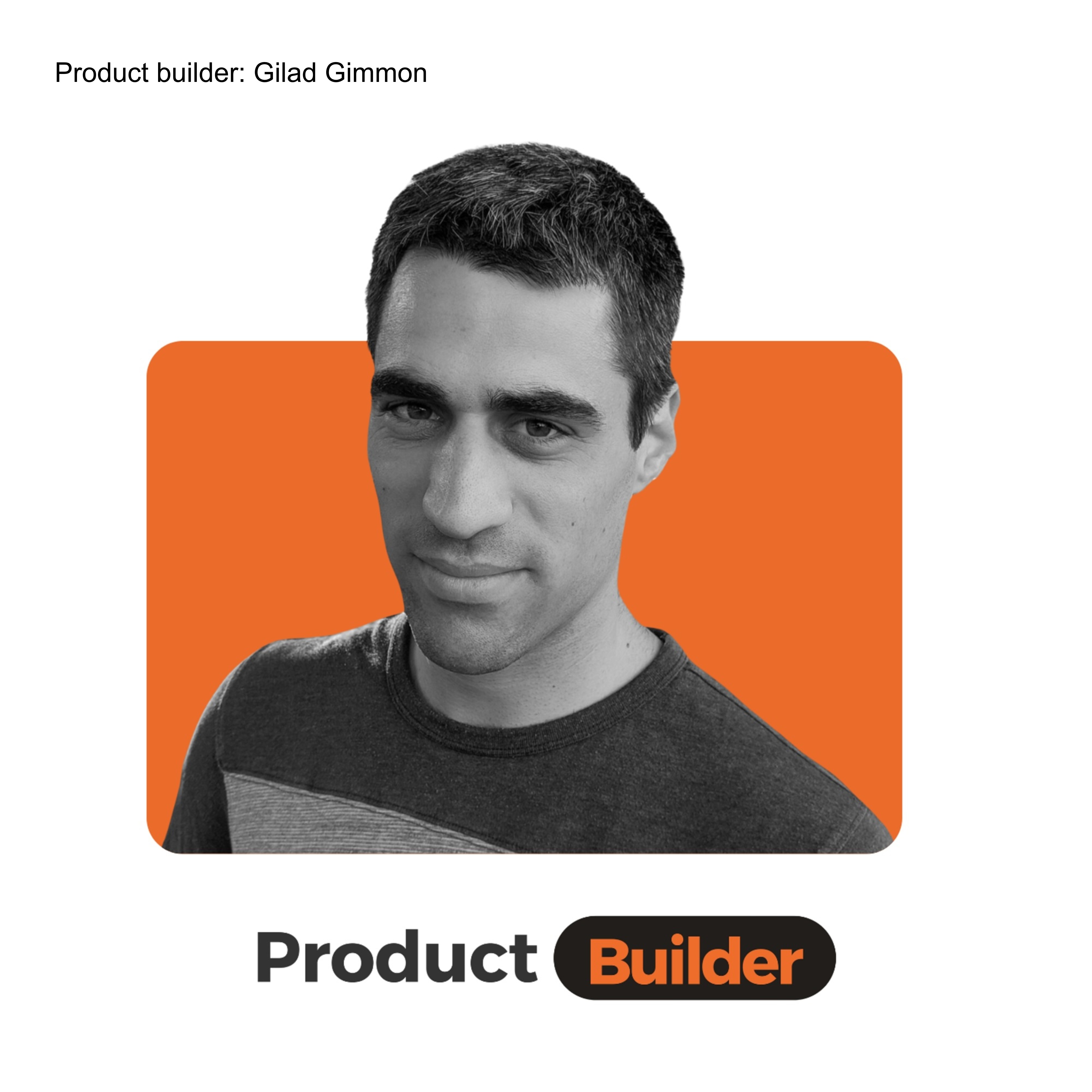
Building for the User Who Doesn't Sign the Check: Digital Accessibility with Gilad Gimon (Evinced)
Host: Eyal David · Guest: Gilad Gimon · About the host
In this episode
- Accessibility is shifting left — you solve accessibility problems already at the design and code stage and throughout the whole development lifecycle, instead of an external plugin that papers over the problem in production.
- The tension between buyer and user is the core of the product: whoever buys and signs off on the budget (the accessibility/compliance manager) is not the one who uses it (the developer) and isn't even their superior — so you have to both convince the buyer and win adoption from the developers, otherwise there will be pushback.
- 'Product is product' — entering a completely new domain (accessibility, products for developers) with a humble approach that goes back to basics can be an advantage, not a disadvantage.
- Accessibility suffers from a knowledge barrier: most developers don't learn it at university, so part of the product's value is exposing them to the field while it finds the problems and offers an automatic fix.
- Accessibility is a mindset and not just a standard: essential for some, useful for all — a feature built for a limited population (e.g. recording WhatsApp voice messages) becomes convenient for everyone, because accessibility limitations are sometimes temporary (driving, holding a baby).
- The PM skills Gilad looks for: smart, sharp people, deep technical understanding (products for developers), strength in UX, and above all a great communicator who can speak the language of every stakeholder — and a sense of humor.
Listen to this episode
Episode Description
Gilad Gimon, VP Product at Evinced, explains what a company that builds tools for developers does in order to produce genuinely accessible digital products — not a plugin that hides problems, but a solution from the 'ground up' (shifting left) across the entire Software Development Lifecycle. Around this unfolds his professional story — from product in 8200, through data analyst and EdTech, to leading product at Evinced — and the product's central tension: the buyer (the accessibility/compliance manager) is not the user (the developer), and you have to market and build for both at once. Gilad also touches on tightening regulation (the European Accessibility Act, ADA) and the idea that accessibility is a mindset that improves the product for everyone.

Full transcript with speakers and timestamps
Selected quotes
“The motto on accessibility is: essential for some, useful for all.”
“I think that in the end, product is product. And precisely when you come in very humble and go for the basics, that can give a very big advantage.”
“It's not something you learn at university... and maybe there's one slide in it about needing accessibility and what an aria-label is, at best.”
Questions & answers
What does Evinced actually do?
Evinced builds tools for developers in the Digital Accessibility world, that help engineering organizations develop products accessible to people with disabilities (through Assistive Technologies like Screen Reader and Keyboard). The tools integrate across the entire Software Development Lifecycle — from design, coding, QA and automated tests, to production — and solve the problem at the root instead of hiding it.
Who are Evinced's clients?
Mainly the largest companies in the world — Fortune 500. Gilad mentions Amazon, Netflix, ServiceNow, Capital One, Citibank, Progressive and Fidelity, with very large deals (6–7 figures).
Why is digital accessibility important beyond regulation?
About 15% of the world's population experience accessibility issues (blindness, partial vision, color blindness and more). If a button like Add to Cart isn't accessible to keyboard and screen reader, a percentage of users simply can't convert — so even from a purely commercial-business standpoint, beyond regulation and brand, it's significant.
What is the tension between 'buyer' and 'user' that Gilad talks about?
In B2B worlds, whoever makes the purchase decision and signs off on the budget (usually the accessibility program manager / accessibility experts) is not the actual user (the developer), and sometimes not even their superior. So the product has to both convince the buyer of its value and win real adoption from the developers — otherwise they'll push back and it won't be implemented.
Which regulations are accelerating the field?
In the US new laws from the Department of Justice are coming in, and in Europe the European Accessibility Act (in a form reminiscent of GDPR). The whole world aligns to the WCAG (Web Content Accessibility Guidelines). Israel is relatively advanced in legislation, though it has seen a wave of class action lawsuits.
Related Episodes
How to Build AI at the Edge of the Device — Ori Katz, Hailo
00:40:49 · March 5, 2026
Ori Katz, who leads the AI SoC domain at Hailo, tells the story of how an Israeli chip company became a serious player in AI at the edge — smart camer...
Tom Mayblum | MIND | When Is a Customer Conversation Worth More Than Data?
00:33:39 · February 9, 2026
Tom Mayblum, VP Product at MIND, in a short tachles episode on when a direct customer conversation is worth more than looking at the data — and when y...
Keren Wexler | Optimove | Product-Team Processes That Create Big Impact
00:44:13 · December 23, 2025
Keren Wexler, Senior Director of Product at Optimove, on product, teams and decision-making — and the point where process stops being bureaucracy and...
Why "I Didn't Hear Anything New" Is the Product Leader's Real Win
00:04:07 · December 21, 2025
Noa Ganot breaks down why product managers fail to move the executive team: it's not a shortage of slide decks, it's the lack of a story that explains...