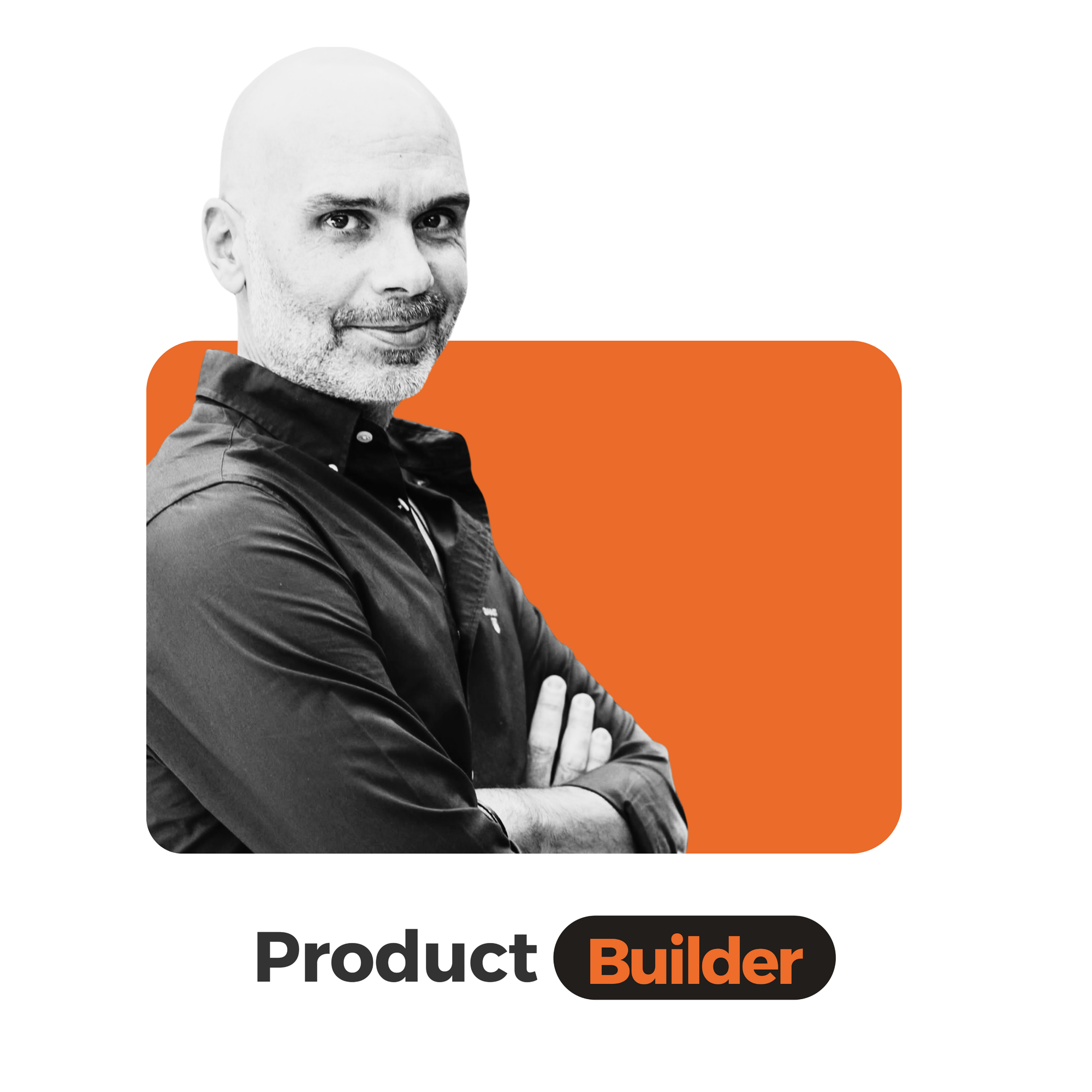
From Utility to Platform: Inside Product Reviews at Lightricks with Alon David
Host: Eyal David · Guest: Alon David · About the host
Alon David, VP Product of Lightricks' Facetune, says the two critical PM skills are leading without authority and making decisions with a partial picture — 'you look through a straw and see blue, and have to tell whether it's sky or sea.' You sharpen them through a structured Product Review, setting your ego aside and treating every result as learning.
In this episode
- Lightricks is undergoing a long Zero-to-One move of turning image and video editing tools into a platform — a stage with several types of players and interactions between them, similar to a marketplace like Airbnb or Amazon.
- The two critical PM skills are the ability to lead without authority over a complex matrix of stakeholders, and the ability to make independent decisions based on partial information without falling into analysis paralysis.
- The way to sharpen product intuition is actually to work within a structured process that moderates the intuition and leads to data-driven reasoning — and to view mistakes as part of the learning process.
- Product Review is the green light for execution: the PM does all the legwork (Six-Q, validation, design, effort estimation) and presents to a room where every role has a mandate to raise a red flag.
- Entering a new product role = 'archaeology work': hands-on use of the product, conversations with company veterans and the CPO, learning users' motivations, and competitive analysis of the competition.
- Constructive criticism and results that contradict a hypothesis are the default, not the failure — the ability to set your ego aside and treat criticism as learning is a product muscle in itself.
Listen to this episode
Episode Description
Alon David is VP Product of Facetune, Lightricks' flagship product, after a career that began with design studies in New York, continued with his own digital design and branding studio, and passed through senior product roles at Fiverr. The episode dives into the nuts and bolts of product work: Lightricks' strategic move from Utilities to platforms, which skills are really sought in a PM, and above all the Product Review process as the central muscle that sharpens planning and decision-making. A thread running through the conversation is decision-making with a partial picture — 'looking through a straw' — and the professional humility to set your ego aside and learn from every iteration.

Full transcript with speakers and timestamps
Selected quotes
“There was basically a decision to turn the tools into platforms.”
“You're looking through a straw and you see blue, and you need to figure out whether it's sky or sea; the more points you poke in the picture, the more you understand whether you're seeing sky or sea.”
“If you really know how to put your ego aside, and look at this thing as something that teaches you.”
Questions & answers
What is Alon David's role at Lightricks?
VP Product of Facetune, Lightricks' flagship product, for about two and a half years. He's responsible for the product group — five to six domains, dev teams, and seven product people — and leads it together with a VP Engineering and a partner from marketing.
What does the move 'from Utility to platform' mean at Lightricks?
The realization that editing tools (Tools/Utilities) have a growth cap in the vertical, hence the decision to turn them into platforms — a stage that hosts several types of players and interactions between them, like a marketplace. It's a long, iterative Zero-to-One project still in the process of sharpening the value proposition and use cases.
What skills does Alon look for in a PM?
Mainly two: leadership — leading a process and people without authority over a complex matrix of stakeholders; and the ability to make independent decisions with a partial picture, without getting stuck in analysis paralysis. Alongside these, a 'people person' personality who knows how to talk to and motivate people.
What does the Product Review process at Lightricks look like?
The PM presents the problem/opportunity, the hypotheses and their validation, the proposed solutions, the Rollout Plan, the KPIs (local/business/global), and the risks and dependencies. In the room sit all the stakeholders (tech, data, design, marketing, sometimes legal) and the VPs, and each has a mandate to raise a red flag. The goal: a green light for execution. A typical product review is about 45 minutes, of which around a quarter of an hour is for discussion.
What is Alon's recommendation for young PMs?
Start at a small startup where you touch many things — the demand to be an all-arounder strengthens the product muscle and intuition. And get to know the product and users deeply — not just who they are, but their motivations — through using the product, working with UX Research, and talking with people.
Related Episodes
Peter Paltchik: Wants to Be Israel's Most Influential Athlete
00:54:27 · September 6, 2026
Peter Paltchik — two-time Olympic judo medalist, entrepreneur, speaker and investor — on what really sustains people who build over the long haul: the...
Amit Slutzky | Trullion | “I Left Figma and Went Into the Field — It Changed Everything”
00:41:22 · February 24, 2026
Amit Slutzky, Director of Product at Trullion, on one of the most important muscles for product people: understanding what's really going on with the...
Roee Froman | Taboola | Building Storytelling That Sells, and Making Product Decisions With Less Risk
00:37:08 · January 5, 2026
Roee Froman, Product Marketing Director at Taboola, on one of the most critical places in product work: how you take a big, messy problem, break it do...
One Metric to Align the Org: How AppsFlyer Turned Product Adoption into Retention
00:05:19 · September 10, 2025
Rachel Frenkel BenHanoch breaks down a case study from AppsFlyer on how to build impact across the entire organization through a single metric of Prod...